 Genius Asian
 3 Effective Ways To Defog Glasses at Zero Cost
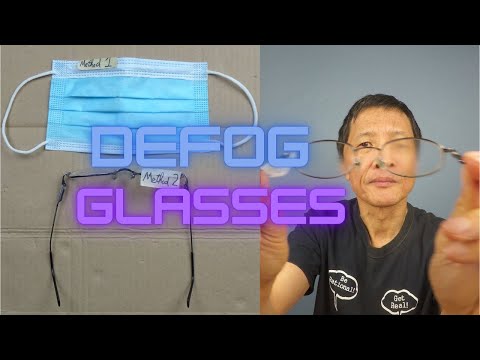
3 Effective Ways To Defog Glasses at Zero Cost
Fogged-up glasses while wearing a mask are more than an annoyance — they are a safety hazard and a major reason people remove their masks prematurely. In this video, Dr. David Zhang presents three effective methods for preventing glasses from fogging, all at zero cost.
Understanding the Problem
Fogging occurs when warm, moist breath escapes from the top of the mask and hits the cooler surface of the glasses. The solution requires either sealing the top of the mask better, changing the surface properties of the lenses, or redirecting the airflow.
The Three Methods
Method 1: Tape on mask. Placing a small piece of medical tape or even regular tape along the top edge of the mask seals the gap where breath escapes upward. This is the most reliable method but requires tape.
Method 2: Tape on glasses. Positioning the mask so the top edge is behind the glasses and taping the glasses bridge area creates a different seal configuration.
Method 3: Tighten the strap. Using a paper clip hook to tighten the mask straps pulls the mask closer to the face, reducing the gap at the top through which breath escapes.
Additional Techniques
Dr. Zhang also experiments with washing lenses with soap (which leaves a thin anti-fog film), inserting fabric into the mask to absorb moisture, and adjusting the overlap between mask and glasses. Since everyone has different face shapes, mask types, and glasses, experimenting with multiple approaches helps find the best solution for your specific situation.
For more practical solutions, see how to peel garlic easily without special tools and rearview mirror repair.
The most important thing is that your mask remains sealed well on all four sides. Choose a defogging method that does not compromise the mask’s primary function of filtration.
Why Glasses Fog Up and What This Video Covers
I’m the Genius Asian. Welcome to the Genius family. Glasses often fog up in winter, so in this two-minute video I’m going to show you my genius way to deal with this problem.
Method One: Tape on the Outside of the Mask
Put tape on the outside of the mask. Fold the exposed tape onto itself so that there is no longer a sticky side exposed. Bend and crease the tape so that the mask and the tape form a right angle. Put on your mask — remember, for right now, we have only put tape on the one side. Put on your glasses. Tuck the mask under the glasses. Blow [?] air into the mask.
You can compare to see which side is fogged up. This side is fogged up, but this side — the one with the tape — is clear. The reason this method works is because the airflow over the center of the lens is redirected to the sides.
To cover more diverse situations, we will treat the other lens differently so that you may switch which eye you are relying on, depending on which method is working better.
Method Two: Tape on the Glasses Frame
Use a piece of tape to dab the frame. This cleans out oil or dirt on the frame. Then place the tape on the edge of the frame. Hold the exposed tape so that it is no longer sticky. The lens and the tape form a right angle. Blow [?] air into the mask. You can compare to see which side is fogged up.
This method can create a chimney effect, moving air quickly to the top and reducing fog. Notice the lenses are on top of the mask. For some people, after a while, the mask may move lower, so the lenses and mask may no longer overlap. When the lens and mask do not overlap, this tape will block the air so that the air goes over the outer side of the lens instead of the inner side. When the lens and mask do not overlap, both methods may reduce fog — just use whichever lens is clearer.
If during use it is fogged up, you can place your fingers over the lens to block airflow, to determine whether the outward side or the inward side is fogged up, so that you may make adjustments. It is easy to wipe the outside of the lens to clear the view.
Variables, Limitations, and the Soap Experiment
Note that people all have different masks, different glasses, different faces, and different moisture and temperature levels. The high number of variables makes a single exact solution very difficult. Both of these methods can alter the normal flow of air, but neither method can seal it completely. By doing a number of trials using these ideas and materials, you can definitely at least reduce the problem.
Some suggest using various chemicals on the lenses. Common household soap is one. Let’s do an experiment: rinse and put soap on one lens, then wash — note we only wash this one side. Rinse and dry. We mark the left side as washed. We blow air on both the washed side and the unwashed side. You can see that they both still fog up. Soap may alter the surface tension of a single droplet and change its shape; however, since there are so many droplets, it may not be effective and may not last long.
There are also suggestions of inserting Kleenex or some other fabric into the mask. My worry is that they may prevent the mask from sealing properly. My invention has no effect on the mask.
Tightening the Strap with a Paper Clip
I would also like to note that tightening the strap to seal the top of the mask better may reduce fogging. We have also demonstrated six different ways to wear masks without sore ears — here is one example.
To seal this face mask better, you can make knots in the ear loops to shorten them. This is fine for a short period, but over long hours it will hurt your ears. Here are a few different ways to make it more comfortable using simple, commonly available household items.
This is a paper clip. Use pliers to bend one end 180 degrees to make a hook. You attach one ear loop to the paper clip and attach the other over the hook. The loops go around the back of your head instead of rubbing and pulling on your ear. With paper clips, you can still make knots to adjust the length.
Finding Your Best Solution
Please leave comments below about the reasons or situations in which your glasses fog up, and which method worked best for you. This may inspire other people to quickly find solutions for their problems — because as we said before, there are many variables, so there is no uniform solution.