 Genius Asian
 EV Charger Experiment Gone Wrong-Emergency Stop Red Button
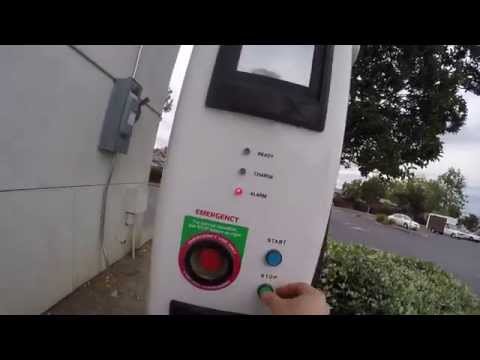
EV Charger Experiment Gone Wrong: Emergency Stop Red Button
Key Takeaways
- Forum suggestions for resetting a charger after an emergency stop button press did not work as described
- Holding the “stop” button or pressing start and stop together did not reset the charger
- The experiment left the charger non-functioning for the next user
- The correct reset procedure (revealed in a follow-up video) is turning the emergency stop button clockwise to release it
- Do not experiment with charging station controls unless you know the correct procedure
The Experiment
Based on two suggestions found on an EV forum, an attempt was made to reset a DC fast charger that had its emergency stop button pressed. The forum claimed that holding the regular “stop” button for a few seconds, or pressing and holding both the green start and red stop buttons together, would reset the charger software.
Both methods were tried. Neither worked. Instead, the charger was left in a worse state than before — non-functioning for the next user. The correct procedure turned out to be much simpler: turning the emergency stop button clockwise causes it to pop back out, restoring power to the charger.
The Correct Answer
The follow-up video reveals the proper reset: the emergency stop button is a twist-to-release mechanism. Turn it clockwise and it pops back out, restoring the charger. Some charger models may also require a phone call to the operator for a remote reset if error codes persist.
The Evolving EV Charging Landscape
The electric vehicle charging infrastructure continues to expand and improve. New charging networks are being built, existing stations are being upgraded to faster speeds, and the user experience is gradually becoming more standardized. Payment systems are moving toward simpler tap-to-pay methods, and apps now provide real-time availability information that reduces the frustration of arriving at an occupied or broken station.
For new EV owners, the learning curve is steeper than it needs to be. Each charging network still has its own authentication system and interface quirks. Connector standards vary between manufacturers (CHAdeMO, CCS, Tesla). Pricing structures range from per-kilowatt-hour to per-minute to session-based. Taking time to learn these differences before you need to charge in a hurry saves significant frustration.
Home charging remains the most convenient and cost-effective option for most EV owners. Installing a Level 2 charger in your garage, powered by a dedicated 240-volt circuit, provides overnight charging that covers the vast majority of daily driving needs. Public charging then becomes supplementary rather than primary, reducing the stress of relying on an imperfect public network.
The Evolving EV Charging Landscape
The electric vehicle charging infrastructure continues to expand and improve. New charging networks are being built, existing stations are being upgraded to faster speeds, and the user experience is gradually becoming more standardized. Payment systems are moving toward simpler tap-to-pay methods, and apps now provide real-time availability information that reduces the frustration of arriving at an occupied or broken station.
For new EV owners, the learning curve is steeper than it needs to be. Each charging network still has its own authentication system and interface quirks. Connector standards vary between manufacturers (CHAdeMO, CCS, Tesla). Pricing structures range from per-kilowatt-hour to per-minute to session-based. Taking time to learn these differences before you need to charge in a hurry saves significant frustration.
Home charging remains the most convenient and cost-effective option for most EV owners. Installing a Level 2 charger in your garage, powered by a dedicated 240-volt circuit, provides overnight charging that covers the vast majority of daily driving needs. Public charging then becomes supplementary rather than primary, reducing the stress of relying on an imperfect public network. For more EV content, check out our guide on windshield crack repair or learn about rearview mirror repair.