 Genius Asian
 Flat Tire-My Most Embarrassing Moments,Unbelievable, I'm Shocked
Flat Tire on a Nissan Leaf: My Most Embarrassing Moment
Key Takeaways
- Many newer cars, including the Nissan Leaf, do not come with a spare tire — only a tire sealant kit
- Being handy with traditional cars does not prepare you for the surprises of newer vehicles
- Nissan Roadside Assistance may only tow to a dealer, and the dealer may not have the tire in stock
- A Nissan/Infiniti 5-lug spare tire is an aftermarket option worth considering
- Study your car’s flat tire procedure before you actually have a flat tire
The Embarrassing Story
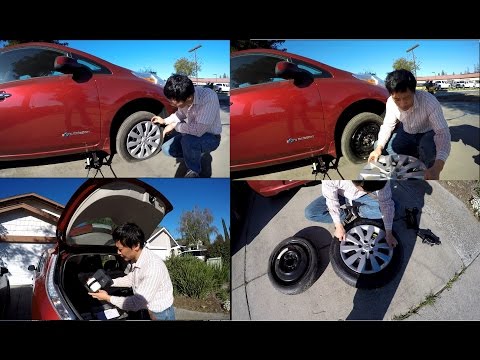
Despite being handy and resourceful with extensive experience changing flat tires, a flat tire on a newly leased Nissan Leaf in the middle of a construction zone parking lot became a humbling experience. The parking lot was under renovation with earth-moving equipment closing in, creating pressure to move the car quickly.
Opening the trunk expecting to find a spare tire, jack, and wrench revealed the first surprise: the Nissan Leaf does not come with a spare tire. Instead, it includes a tire sealant kit (Part Number 997901NM4D) designed to repair small punctures. This was completely unexpected.
The Cascade of Problems
The sealant kit only works for small holes, and it was unclear whether the damage qualified. Calling Nissan Roadside Assistance revealed another surprise: they would only tow to a Nissan dealer, not to a nearby tire shop. The dealer was further away and might not have the specific tire in stock. The brake lock system added another complication.
Meanwhile, the construction crew was patiently working around the disabled car, which added to the embarrassment. They were both patient and helpful, which was deeply appreciated.
Lessons Learned
Know your car before you need to know it. Spend 30 minutes reading the flat tire section of your owner’s manual. Know whether your car has a spare tire, a sealant kit, or nothing at all. Know how to use whatever equipment is provided. Consider purchasing a compact spare tire and the necessary tools as a backup.
Many newer cars have eliminated the spare tire to save weight and improve fuel efficiency. This is especially common in EVs where every pound affects range. Understanding this before a flat tire saves significant stress.