
video

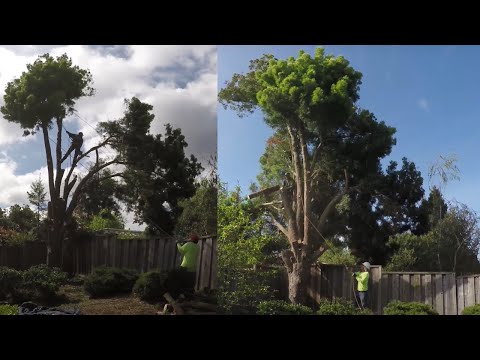
How To Cut Down A Large Tree In Sections Safely Without Damaging Surrounding
By Genius Asian Updated

How to Cut Down a Large Tree in Sections Safely

Key Takeaways

  • Sectional tree removal is necessary when the tree cannot be felled in one piece due to surrounding structures
  • Work from the top down, removing branches and sections of trunk progressively
  • Roping sections before cutting prevents them from falling uncontrolled
  • This is inherently dangerous work — know your limits and hire professionals for very large trees
  • Proper planning of the cut sequence prevents damage to surrounding property

When Sectional Removal Is Necessary

When a large tree needs to come down but buildings, fences, power lines, or other structures prevent it from being felled in one piece, sectional removal is the answer. Instead of cutting the tree at the base and letting it fall, you climb the tree (or use a lift) and remove it piece by piece from the top down.

The Process

Start with the smallest branches at the top and work downward. Remove branches first, then cut the trunk in manageable sections. Each piece should be small and light enough to control during and after the cut.

For larger branches and trunk sections, use a rope system: tie the section above the cut point, make the cut, and lower the section to the ground on the rope. This prevents heavy pieces from falling uncontrolled and damaging the surrounding area.

Safety First

Tree removal is one of the most dangerous activities a homeowner can undertake. Falling branches can be unpredictable. Chainsaws require training and respect. Working at height adds fall risk. For large trees, seriously consider hiring a professional arborist who has the equipment, insurance, and expertise to do the job safely.

If you do proceed with DIY removal, wear a hard hat, safety glasses, hearing protection, and chainsaw chaps. Have a spotter on the ground. Never work alone. And never cut a branch you are standing on.

The DIY Mindset

The core principle behind all DIY projects is the willingness to try solving a problem yourself before paying someone else to do it. This mindset saves money, builds practical skills, and provides the satisfaction of self-sufficiency. Not every project will be perfect on the first attempt, but each attempt teaches something valuable for the next one.

Start with low-risk projects where a mistake will not cause serious damage or safety hazards. Kitchen repairs, simple plumbing fixes, basic electrical work (with the breaker off), and cosmetic improvements are good starting points. As your skills and confidence grow, you can take on more complex projects that save increasingly significant amounts of money.

Invest in quality tools gradually. You do not need to buy everything at once. Purchase each tool as a specific project requires it, and within a few years you will have a well-equipped workshop that was built incrementally rather than all at once. Quality tools last decades when properly maintained, making them one of the best investments a homeowner can make.

The DIY Mindset

The core principle behind all DIY projects is the willingness to try solving a problem yourself before paying someone else to do it. This mindset saves money, builds practical skills, and provides the satisfaction of self-sufficiency. Not every project will be perfect on the first attempt, but each attempt teaches something valuable for the next one.

Start with low-risk projects where a mistake will not cause serious damage or safety hazards. Kitchen repairs, simple plumbing fixes, basic electrical work (with the breaker off), and cosmetic improvements are good starting points. As your skills and confidence grow, you can take on more complex projects that save increasingly significant amounts of money.

Invest in quality tools gradually. You do not need to buy everything at once. Purchase each tool as a specific project requires it, and within a few years you will have a well-equipped workshop that was built incrementally rather than all at once. Quality tools last decades when properly maintained, making them one of the best investments a homeowner can make. For more DIY content, check out our guide on how to do bathtub caulking or learn about windshield crack repair.

Watch on YouTube →