
How to Fix Air Conditioner Blowing Hot Air
Key Takeaways
- There are many different reasons why your AC is blowing warm air
- Before calling a professional, check out these common causes that are simple to diagnose and easy to fix on your own
- All of the sudden your air conditioner starts blowing hot air
- With the record heatwave, your handyman may not be available anytime soon
- I will show you the easy ways to troubleshoot and explain to you the reasons in a very simple way
Why This Matters
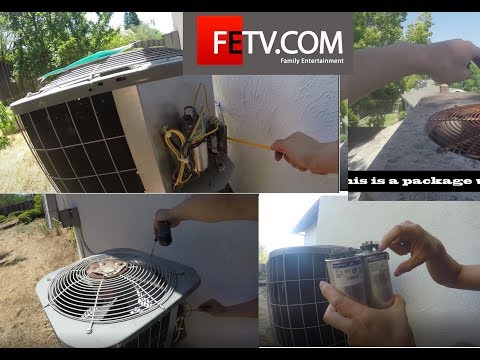
There are many different reasons why your AC is blowing warm air. Before calling a professional, check out these common causes that are simple to diagnose and easy to fix on your own. All of the sudden your air conditioner starts blowing hot air. With the record heatwave, your handyman may not be available anytime soon. I will show you the easy ways to troubleshoot and explain to you the reasons in a very simple way. Fixing AC is very simple: the circuit only contains motor, fan, relay and a capacitor. My advice: even if you call a professional, it does not hurt to know what is wrong with your AC unit. This will help you save the money and avoid unnecessary repair. Note that in the video I used a graphite pencil, although the pencil has rubber eraser (the eraser is a good insulator) it is not as safe. I could not find a chopstick at that time, although the new pencil I had at the time was ok it should not be recommended. We immediately realized that, that is why we switched to a plastic ball pen with a plastic cap at . When the fans don’t work, there are 3 possibilities: A. The starting capacitor is broken, I showed in this video how to test this case. You don’t need any tools in this test. B. No current supplied to the fan. As shown in this video, use the contactor/relay method to eliminate the thermostat, no special tool is needed. But if this does not work, use a voltage meter to see if there is voltage between the terminals at the fan. If there is no voltage, then the fan may be fine, you need to trace the wire to see why there is no voltage. C. The Fans broken, use a voltage meter to see if there is voltage between the terminals at the fan. If there is voltage and test in A does not work, then the fan is broken. Index High definition video may help you see all of this better. This video is shot in 4K UHD setting (if you have 4K TV, you may select this youtube Setting/Quality).
Understanding the Basics
An air conditioning system works by cycling refrigerant between an indoor evaporator coil and an outdoor condenser coil. The outdoor unit contains the compressor (the heart of the system), a condenser fan, a contactor relay, and a start capacitor. The thermostat inside the house sends a signal to the contactor relay, which energizes the compressor and fan. When any of these components fails, the system stops cooling properly. The three most common failure scenarios are: the capacitor is bad (fan will not start), the relay is bad (nothing runs), or the fan motor itself has failed.
The DIY Advantage
An HVAC service call typically costs $150 to $300 just for the diagnosis, plus parts and labor. A replacement capacitor costs $10 to $25 at an electrical supply store. Being able to identify and replace a bad capacitor yourself can save hundreds of dollars.
Tips for Best Results
A bulging or leaking capacitor is the most common cause of AC failure and is easy to identify visually. If the capacitor looks swollen compared to a good one, it needs replacement. When testing, match the microfarad rating and voltage rating exactly. Always discharge the old capacitor before handling it. If you can jump-start the fan by giving it a gentle push (with an insulated tool, never your fingers), the capacitor is almost certainly the problem.
Video Chapter Guide
Here is a quick reference for the key sections covered in the video:
- 0:00 Air Conditioner Blowing Hot Air
- 0:27 3 components: thermostat, outside fan, compressor
- 0:47 relay is controlled by thermostat, humming sound
- 1:14 capacitor bulged, jump start fan
- 1:53 remove capacitor
- 2:39 3 ways to tell a bad capacitor
- 3:10 what capacitor spec to buy
- 3:30 comparing good capacitor and bad capacitor
- 4:03 install new capacitor
- 4:42 testing
- 5:03 eliminating thermostat problem
- 5:23 eliminating fan motor
Use these timestamps to jump directly to the section most relevant to your situation.
More Practical Guides
Understanding basic AC troubleshooting empowers you to handle the most common failures yourself and helps you avoid being overcharged if you do need to call a professional.
For more hands-on tutorials, check out our guides on bathtub caulking and peeling garlic easily without special tools. Each one follows the same practical, no-nonsense approach to help you save money and build useful skills.