 Genius Asian
 Epic Journey on Icefields Parkway: Top 5 Must-See Natural Wonders | Alberta, Canada
Epic Journey on Icefields Parkway: Top 5 Must-See Natural Wonders
The Icefields Parkway is regarded as one of the globe’s most scenic drives, running through the mountains of Alberta, Canada. In this video, Dr. David Zhang guides you through five iconic sites: Columbia Icefield Skywalk, Athabasca Glacier, Peyto Lake, Bow Lake, and Crowfoot Glacier.
Columbia Icefield Skywalk
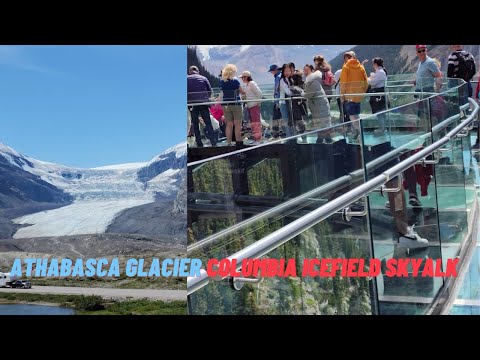
This glass-floored lookout is poised 918 feet (280 meters) above the valley, providing an exhilarating experience and environmental insights about the region’s glaciers and geology.
Athabasca Glacier
North America’s most visited glacier. Specialized Ice Explorer coaches take visitors onto the glacier surface, where you can actually walk on ancient ice. The video explains the differences among icefields, glaciers, ice caps, and ice sheets.
Peyto Lake and Bow Lake
These blue-turquoise colored lakes are prime destinations for photographers. The stunning colors come from glacial rock flour suspended in the water, which scatters light differently than clear water.
Crowfoot Glacier
Named for its three-toed shape resembling a crow’s foot, this glacier is visible from the highway and provides a dramatic backdrop for Bow Lake.
For more travel guides, check out Dubrovnik, Croatia and Carnival Breeze cruise ship. For travel preparation, see internet access tips when traveling to Europe.
Whether pressed for time or traveling leisurely, this guide helps you discover what captivates you and warrants a stop on this world-class scenic drive.
Overview: Driving the Icefields Parkway
The Icefields Parkway is widely considered to be one of the most scenic drives in the world. There are so many breathtaking places along the way that you will need to find a balance of what is worth seeing and what is better to skip if you have limited time.
The route leads to the Columbia Icefield Discovery Center, which serves as the hub for the two most visited sites: the Columbia Icefield Skywalk and the Athabasca Glacier. The Discovery Center has restaurants, a gift shop, and a restaurant on the second floor. You can also book glacier tours and Skywalk tickets here. While waiting for a tour, you can visit the modest museum with a small theater on the lower level — it is not well marked; you do need to go down one level from the main floor to find it.
Columbia Icefield Skywalk
From the Icefield Discovery Center, you board a bus that takes you to the start of the Skywalk. An award-winning piece of engineering sitting over the Sunwapta Valley [?], the Columbia Icefield Skywalk is a glass-floored lookout extending from a cliff about 918 feet, or 280 meters, above the valley floor. It offers a thrilling walk around the observation platform with just glass between you and the world below. It can be quite daunting, but it will give you a truly memorable view of the stunning environment.
You can sit or stand on the bridge as long as you like, or walk around it as many times as you like. A hint for those feeling nervous about the glass floor: it does get easier each time. While you may be clutching the side rails and not looking down on your first pass, after a few trips around you will probably be able to walk easily and look down through the glass without fear.
There are interpretive storytelling boards along the path to the lookout, detailing the history and significance of the environment. At a kilometer long, it will take you as long as a normal walk of that distance, with a few moments to stop and take in the view and the history. After finishing the Skywalk, you board a bus back to the Icefield Discovery Center.
Athabasca Glacier and the Ice Explorer
A journey on the Icefields Parkway would be incomplete without seeing the Athabasca Glacier up close. Thanks to its accessibility, the Athabasca Glacier holds the distinction of being the most visited glacier in North America. It is possible to park near the road and walk a trail up next to the glacier, but you cannot walk safely on the glacier from that point.
If you book a glacier tour through the Icefield Discovery Center, you first board a bus to a drop-off point, then transfer to a specialized coach vehicle called an Ice Explorer. These Ice Explorers take visitors to areas where they can disembark and safely walk on the glacier. With massive low-pressure tires, these coaches ensure minimal impact on the glacier’s delicate environment. Extra-large side and top windows provide greater all-around visibility as your guide explains the glacier environment.
The vehicle pauses so that water can wash the dirt off the tires from the road below, minimizing impact on the natural state of the glacier. Alongside the road you can see what appears to be dirt or rocks, but underneath there is all ice — it is not solid dirt or rocks. Cracks expose the glacier’s color. As you step onto the glacier, you will see up close the glacier’s mesmerizing blues peeking through the cracks and crevices.
Understanding Ice Fields, Glaciers, Ice Caps, and Ice Sheets
What is the difference between an ice field, a glacier, an ice cap, and an ice sheet? The first distinction is size. Glaciers are the smallest of the group and often form around the edges of ice fields. Ice fields are larger than glaciers but smaller than ice caps — they are expansive flat areas of ice, like the Columbia Icefield, which covers 325 square kilometers. Ice caps are dome-shaped masses of ice covering less than 50,000 square kilometers. Ice sheets, which are even vaster, cover more than 50,000 square kilometers.
The second distinction is how they form. Where the landscape is flat, an ice field can form. Glaciers often form towards the edge of an ice field and are, however slowly, moving down a slope. Ice caps and ice sheets are dome-shaped masses of glacier ice that spread out in all directions, covering surrounding terrain, with temperatures remaining below freezing year-round and creating a thick, compacted build-up of ice.
The Columbia Icefield is 100 to 365 meters in depth and is the largest ice field in the Rocky Mountains. It includes 30 glaciers covering almost 325 square kilometers and is surrounded by 11 mountains, including the highest mountain in Alberta, Mount Columbia. Meltwater from the ice field feeds three major rivers: the Columbia, Athabasca, and Saskatchewan rivers. The ice field is 133 kilometers north of Lake Louise and 104 kilometers south of Jasper.
Crowfoot Glacier and Bow Lake
On the way from Banff to the Columbia Icefield, one stop is at Crowfoot Glacier on Crowfoot Mountain. One of the notable things to observe there is that what used to resemble a crow’s foot has changed due to glacial melt — the glacier has lost one of its “fingers,” so it no longer quite resembles its namesake shape. But it was a very large and well-known glacier in its time.
The shimmering blue Bow Lake, flanked by the dramatic rock wall of Crowfoot Mountain and adorned with hanging glaciers, is one of the most popular stops for photographers in Banff National Park and is the origin of the Bow River. The runoff from Crowfoot Glacier plays a vital role in supplying water to the Bow River, a magnificent wide river which carves its way through the mountains down to the city of Calgary and further into the Alberta Prairies.
Peyto Lake [?]
Just a short drive away, you will find Peyto Lake [?] located off the Icefields Parkway, or Highway 93. To capture its beauty, park at the Bow Summit and take a short walk to the viewpoint. Nestled in the Waputik Range [?], the lake sits between Calderon Peak [?], Peyto Peak [?], and Mount Jimmy Simpson. Renowned as one of the most picturesque lakes in Banff National Park, Peyto Lake [?] is a turquoise gem fed by the melting waters of the Peyto Glacier [?], a component of the expansive Wapta Icefield. Located 40 kilometers north of Lake Louise, it is a sought-after stop on the scenic Icefields Parkway.
The view over the lake offers a panorama that is arguably one of Banff’s finest. This spot offers a different charm than Moraine Lake, yet it is equally breathtaking. Perhaps its somewhat more remote access is why it witnesses fewer visitors, but the allure of the viewpoint makes it a top recommendation for things to do in Banff. In 2021, Parks Canada undertook significant improvements to the lake viewpoint, walking trails, and parking areas, enhancing the visitor experience.
Ever wondered why some lakes exhibit such vibrant colors? There will be a separate video covering that topic.