 Genius Asian
 Refrigerator Emergency Short Circuit: Diagnose & Fix In 20 Minutes, All Major Problems
By Genius Asian
Published
· Updated
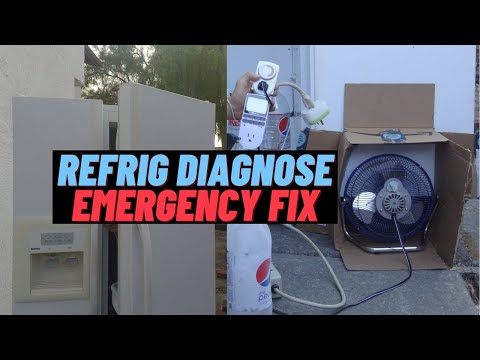
Refrigerator Emergency Short Circuit: Diagnose & Fix In 20 Minutes, All Major Problems
Key Takeaways
- When your fridge stopped working, you have a flood in the freezer, and you have food that is spoiling, you desperately want to fix the problem
- But finding the problem and ordering a new part or a new refrigerator could take a few days or longer
- Today we are going to show you how to diagnose and deal with this emergency situation
- Rather than declaring the refrigerator kaput and letting your food spoil, you may manually jumpstart and control your refrigerator, and bypass those faulty components
- We will show you what you can do for the most common problems such as a bad condenser fan motor, a bad control board, a bad thermostat, a bad start relay, a bad overload, or a bad evaporator fan motor
Understanding the Basics
A refrigerator has surprisingly few major components: the compressor (pumps refrigerant), the condenser fan (cools the compressor and condenser coils), the evaporator fan (circulates cold air inside), the thermostat (controls temperature), the start relay and overload protector (help the compressor start), and the control board (coordinates everything). A single component failure is far more common than multiple simultaneous failures, so systematic diagnosis almost always identifies the culprit.
Video Chapter Guide
Here is a quick reference for the key sections covered in the video:
- 0:00 Overview
- 0:40 compressor & condenser fan
- 1:12 case 1 compressor running & condenser fan not running
- 1:32 check condenser fan motor
- 1:56 use alternative condenser fan hack
- 2:43 case 2 compressor not running & condenser fan not running
- 3:42 force compressor & condenser fan running
- 5:59 case 3 compressor not running but condenser fan running
- 6:27 start relay, overload & capacitor
- 7:03 test start relay
- 8:07 PTC relay
- 8:59 test overload
Use these timestamps to jump directly to the section most relevant to your situation.