 Genius Asian
 Sea Cave With Open Ceiling at Na Pali Coast, Kauai, Hawaii- UHD 4K
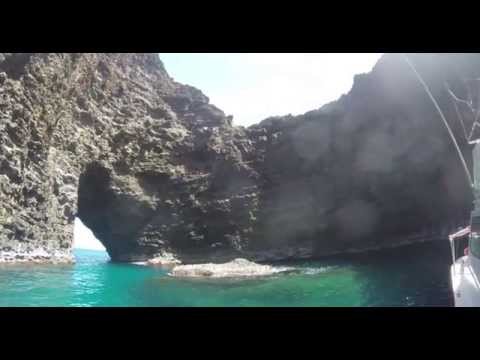
Sea Cave With Open Ceiling at Na Pali Coast, Kauai, Hawaii
Key Takeaways
- The Na Pali Coast features remarkable sea caves formed by Pacific Ocean waves slamming into porous lava over thousands of years
- The Open Ceiling Cave is a hollowed-out lava tube with a massive opening at the top, creating a natural cathedral effect
- Ancient Hawaiians may have used this cave as a resting point when traveling along the coast by canoe
- On calm days, small boats can safely enter the cave and circle inside
- A second cave explored in the video is deep and long, becoming pitch dark at the far end
The Open Ceiling Cave
Among the many natural wonders along the Na Pali Coast, the Open Ceiling Cave stands out as one of the most remarkable formations. This sea cave is actually a hollowed-out lava tube that has been carved and expanded by centuries of harsh wave action from the Pacific Ocean slamming into the porous volcanic rock.
What makes this cave extraordinary is the enormous opening in its ceiling. Sunlight pours through this natural skylight, illuminating the interior with a warm glow that contrasts dramatically with the deep turquoise water below. The effect is that of a natural cathedral — massive walls rising around you, bright light filtering down from above, and crystal-clear water reflecting the colors of the volcanic rock.
The cave’s history adds to its appeal. Historians believe ancient Hawaiians may have used this sheltered space as a resting point when traveling along the rugged coastline by canoe. The protected interior would have offered relief from the open ocean swells and a place to regroup before continuing the journey. To this day, no one knows what the ancient Hawaiians called this cave, so the descriptive name “Open Ceiling Cave” has become its modern designation.
Visiting the Cave by Boat
On calm days, small tour boats can safely enter the Open Ceiling Cave. The interior is large enough for a boat to circle completely around, giving passengers a full 360-degree view of the cave walls and the sky visible through the ceiling opening. The turquoise water inside the cave is remarkably clear, and looking down you can often see the rocky bottom and marine life below.
The experience of being inside this natural formation is genuinely awe-inspiring. The scale is difficult to appreciate from photographs — the walls tower above you, sound echoes in unexpected ways, and the play of light on the water creates constantly shifting patterns.
The Deep Cave
The video also explores a second cave along the Na Pali Coast. Unlike the Open Ceiling Cave, this one has no skylight. It extends deep into the cliff face, and as you travel further inside, daylight gradually fades until you reach a point of complete darkness.
This cave demonstrates just how extensively the ocean has carved into the volcanic rock. The passage is long enough that by the time you reach the far end, the entrance behind you is just a distant point of light. Floating in pitch darkness inside a sea cave, with only the sound of water lapping against the walls, is both thrilling and humbling.
How the Caves Formed
The sea caves of the Na Pali Coast are geological features millions of years in the making. Kauai is the oldest of the major Hawaiian islands, and its coastline has been subjected to the relentless force of Pacific Ocean waves for far longer than the younger islands. Ocean waves find weaknesses in the lava rock — cracks, softer layers, or existing tubes left by ancient lava flows — and gradually enlarge them into caves.