 Genius Asian
 Volcano-Steam Vent-Sulphur Bank-Lava Tube-Devastation Trail On Big Island, Hawaii-UHD 4K
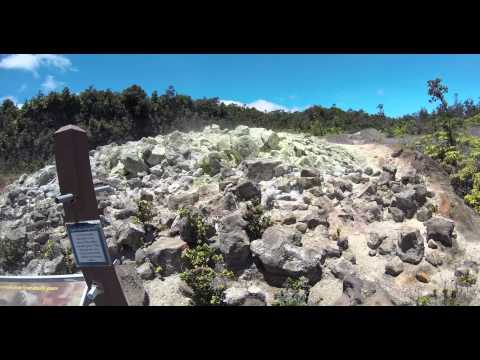
Volcano, Steam Vents, Sulphur Bank, Lava Tube, and Devastation Trail on the Big Island
Key Takeaways
- Hawaii Volcanoes National Park offers multiple unique geological experiences in a compact area
- Steam vents demonstrate active lava beneath the earth’s crust
- Sulphur Banks feature volcanic gases that deposit pure sulfur crystals and stain clay vivid colors
- The Thurston Lava Tube is a natural tunnel accessed through a rainforest jungle
- Devastation Trail shows the aftermath of Kilauea Iki’s 1959 eruption
Hawaii Volcanoes National Park
Hawaii Volcanoes National Park is one of the most geologically active places on Earth. Within the park, you can experience steam rising from ground cracks, smell sulfurous volcanic gases, walk through an ancient lava tube, and see landscapes devastated by eruptions — all in a single day.
The Steam Vents
These cracks in the earth release plumes of steam caused by groundwater meeting the intense heat of underground lava. On cool mornings, the steam is especially visible, rising in ghostly columns. Standing near the vents, you feel warmth radiating from deep within — a tangible reminder of the active volcano beneath your feet.
Sulphur Banks
At Ha’akulamanu, volcanic gases seep continuously from the ground, rich in carbon dioxide, sulfur dioxide, and hydrogen sulfide — responsible for the distinctive rotten-egg smell. Some gases deposit pure crystalline sulfur, creating bright yellow patches. Other gases form sulfuric acid that breaks down lava into clay, stained red and brown by iron oxide. The result is a landscape of unexpected colors.
The Thurston Lava Tube
The Thurston Lava Tube (Nahuku) was carved centuries ago by flowing lava. When the eruption ended, the outer layer had hardened into a tube while the liquid interior drained away, leaving a hollow passage. You walk through a rainforest of giant ferns and ohia lehua trees to reach the cool, dark interior. The tube is large enough for comfortable walking, with paved paths and lighting.
Devastation Trail
This half-mile boardwalk crosses landscape devastated by the 1959 Kilauea Iki eruption. Volcanic cinders and stunted pioneer vegetation slowly reclaiming the barren ground illustrate both the eruption’s power and nature’s resilience.