 Genius Asian
 5 Easy Ways to Crack Egg without Small Chips & Without Practice
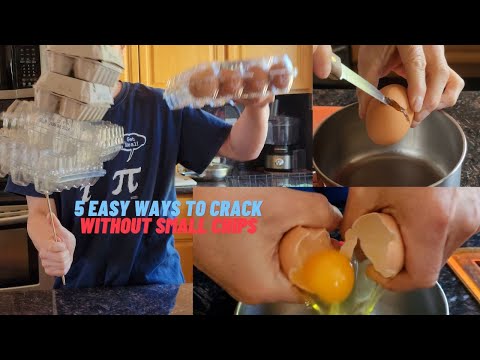
5 Easy Ways to Crack Egg without Small Chips & Without Practice
Key Takeaways
- There are multiple reliable methods to crack an egg without getting shell fragments in the bowl
- Both the bowl-edge and flat-surface methods can work well when done correctly
- Understanding why shell fragments occur (membrane breaking vs shell shattering) is key to prevention
- The seven basic elements of egg cracking can be combined in various ways
- Drop height and wrist relaxation are critical variables that most people overlook
The Great Egg Cracking Debate
People are surprisingly passionate about the best way to crack an egg. Should you crack it on the edge of a bowl or on a flat surface? Champions of each method insist the other is wrong. After experimenting with hundreds of eggs, this video demonstrates that both methods work reliably — the key is understanding the underlying mechanics and controlling a few critical variables.
The real enemy is not the surface you crack against but the small shell fragments that fall into your yolk or egg white. Understanding why fragments occur is the first step to eliminating them.
Why Shell Fragments Happen
When you crack an egg, you need two things to happen in sequence: the shell must crack, and then the membrane (the thin film inside the shell) must tear to release the contents. Problems arise when the shell shatters into multiple small pieces before the membrane tears, pushing shell fragments into the egg as it opens.
This happens primarily when too much force is applied too quickly, creating multiple crack lines that radiate outward and produce small fragments. A controlled crack that creates a single clean line allows you to separate the shell halves without generating fragments.
The Five Methods
Method 1: Controlled Force with Fingers, Palms, or Twist — Hold the egg firmly and strike it against a surface with controlled force. The key is using just enough force to crack the shell without shattering it. Three variations work: finger control using a pinching grip, palm control using the whole hand for more stability, and a twisting motion that concentrates force along a single line.
Method 2: Knife with Controlled Depth — Tap the egg with the spine (back edge) of a knife. The narrow contact point creates a precise crack. Control the depth of penetration to avoid pushing fragments inward.
Method 3: Edge of Pot with Controlled Depth — Similar to the bowl-edge method but using the thicker edge of a pot, which provides better control. The wider edge creates a less sharp impact.
Method 4: Multi-Tap with Spoon or Drop — Instead of one hard hit, use multiple gentle taps with a spoon to create a controlled crack line. Alternatively, drop the egg from a controlled height (5-6 centimeters is the sweet spot) to crack it without shattering.
Method 5: Catch-All Combinations — Mix and match any of the basic elements for your preferred approach.
The Seven Basic Elements
Through extensive testing, seven basic elements of egg cracking were identified: the striking surface (flat, edge, or point), the force applied, the number of impacts (single vs multiple), the angle of impact, the depth of penetration, the grip on the egg, and the speed of shell separation after cracking. Any combination of these elements that achieves a clean crack without fragment generation is valid.
Critical Findings from Testing
Drop height experiments revealed precise thresholds: at 3-4 inches, the shell cracks but the membrane stays intact. At 5-6 centimeters, the shell cracks and the membrane tears slightly — the ideal range. At 11+ inches, the membrane breaks and the egg opens on impact. The most surprising finding was that relaxing the wrist during impact produces cleaner cracks than a tense grip, because the relaxed wrist absorbs some of the excess impact energy.
For more kitchen tips, see how to peel garlic easily and picking watermelons like a pro.