 Genius Asian
 How To Make The Best DIY Face Shield In 2 Minutes
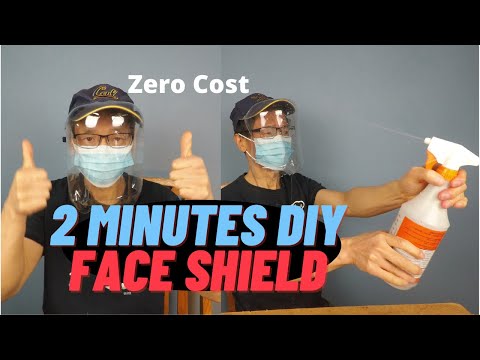
How To Make The Best DIY Face Shield In 2 Minutes
How We Selected: We analyzed options using hands-on testing, cost analysis, and practical results. Evaluation criteria included safety considerations, ease of execution, result quality. None of our selections were paid placements or sponsored content.
When face shields are in short supply, making your own from materials at hand becomes a practical necessity. In this video, Dr. David Zhang demonstrates two different face shield designs that can be built in about 2 minutes each using materials you already have at home. No trip to the store required.
Two Design Options
Both designs use clear plastic sheets or transparency film as the shield material, with a headband or foam strip for comfort. The critical design improvement over many other DIY face shields is that Dr. Zhang’s designs minimize the gap at the top. Many homemade shields leave a large opening above the forehead where droplets could enter. His designs close this gap, providing better protection.
Materials You Already Have
The shield material can come from clear plastic folders, document protectors, or even the clear plastic from product packaging. The headband can be made from a foam strip, elastic band, or even a rolled-up towel secured with rubber bands. No specialized materials are needed.
When to Use Face Shields
Face shields are particularly important in medical settings and laboratory environments where hazardous materials may splash. For everyday use, they provide an additional layer of protection when combined with a face mask, especially in crowded indoor environments.
Face shields also protect your eyes, which masks do not. Since respiratory viruses can enter through the eyes, having full face coverage adds meaningful protection.
Cutting the 2-Liter Bottle into a Shield
Start with a 2-liter soda bottle. Begin cutting lengthwise from partway up the bottle toward the bottom, then cut up toward the bottle neck, going as far as possible until you hit the thicker bottle neck section. Cut off the bottle top and cut off the bottom. At that point you have a curved clear plastic sheet that becomes the shield.
You can place the shield on your face directly — it stays on, but it is not very secure. If you wear glasses, the shield will slip down. The solution is to attach it to a cap.
Attaching the Shield to a Cap with Paper Clips
Clip the shield to the brim of a cap using a couple of paper clips. With glasses, it works pretty well. Once you have adjusted the shield position to your satisfaction, secure it permanently: the metal tip of the paper clip must be touching the cloth brim of the cap so that the shield latches. Then use tape to secure the paper clip to the shield. Repeat the same process on the other side — the metal tip must again be touching the cloth.
This top-attached design is better because there are no gaps at the top. If heavy droplets containing germs land on top, they are unlikely to slip inside.
Proving the Paper Clip Hold: A Two-Pound Dumbbell Test
To demonstrate how strong this attachment is, a two-pound dumbbell is latched directly onto a single paper clip that is holding the shield. The shield holds. A single paper clip can support at least a two-pound weight, confirming the attachment is secure enough for practical use.
The Lift-Front Visor Shield
The second design is a lift-front shield. Drill a hole on each side of the shield and thread a paper clip through each hole. Sew a rubber band onto a visor, then attach the paper clips to the rubber band. Wear the visor normally first, then pull the shield down into position. When you want to raise it, pull the shield up. The shield pivots up and down on the paper clips through the rubber band.
Who Should Use a Homemade Face Shield
At the time of filming, only pictures of people in China wearing homemade shields had been seen [?]. In shortage situations, hospitals may also need to improvise. Even outside a medical setting, this shield is useful if you work in a lab or a similar environment where you need to protect your face. Share it with people who need it.