 Genius Asian
 Custom, Tightly Fit DIY Mask With Easy Filter Replacement In 3 Seconds
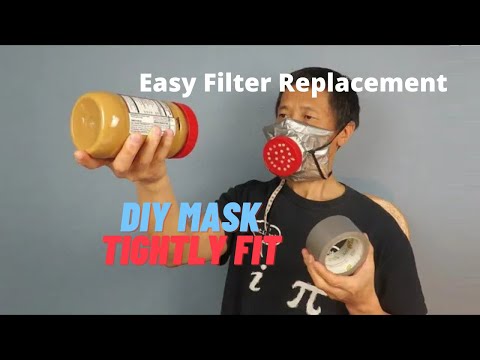
Custom, Tightly Fit DIY Mask With Easy Filter Replacement In 3 Seconds
Key Takeaways
- Reducing side gaps in face masks dramatically improves filtration effectiveness
- This video shows how to achieve a tighter fit with no cost using simple modifications
- Replaceable filters can be used more efficiently with proper mask construction
- The techniques apply to both commercial and DIY face masks
- A well-fitted basic mask can outperform a poorly fitted premium mask
Why Fit Matters More Than Filter Quality
The most expensive, highest-rated filter material becomes nearly useless if air bypasses it through gaps around the edges of your mask. Studies have consistently shown that the fit of a face mask has a greater impact on its real-world effectiveness than the quality of the filter material. A perfectly sealed N95 respirator filters over 95 percent of particles, but the same mask worn with gaps around the nose or cheeks may filter as little as 50 percent because unfiltered air takes the path of least resistance through the gaps.
This principle applies equally to commercial surgical masks, cloth masks, and DIY masks. Improving the seal is the single most impactful modification you can make, and it often costs nothing.
Reducing Side Gaps
The most common gap in face masks occurs along the sides of the cheeks, where the flat surface of the mask meets the curved contour of the face. Several techniques address this:
Knotting and Tucking: For ear-loop masks, tie a knot in each ear loop close to where it attaches to the mask body. Then tuck the excess material at the sides inward to create a more contoured shape. This transforms a flat mask into one that cups around the face more closely.
Nose Wire Enhancement: The metal nose wire in most masks only covers a short distance. Extending the conformable wire area (using additional wire from twist ties or thin craft wire) allows the mask to contour more precisely to the bridge and sides of the nose.
Mask Bracket or Frame: A bracket worn under the mask holds the filter material away from your mouth while pressing the edges more firmly against your face. This improves both comfort and seal simultaneously.
Efficient Filter Use
Many mask designs allow replaceable filters, but filters are often used inefficiently — either changed too frequently (wasting money) or not changed often enough (reducing protection). Proper mask construction that distributes airflow evenly across the filter surface extends filter life because no single area gets overloaded with trapped particles.
The video also demonstrates how to position the filter within the mask for maximum coverage and minimum bypass, ensuring that air must pass through the filter rather than around it.
DIY Improvements
For homemade masks, the most effective improvements are adding a conformable nose wire to every mask you make, using a coffee filter or non-woven polypropylene as a filter layer, ensuring the mask extends well below the chin and up close to the eyes, and testing the seal by breathing through the mask near a candle flame — if the flame flickers significantly, air is escaping around the edges.
The Broader Context
This video was created in response to viewer questions following the viral “DIY face masks in 10 seconds” video. The practical, iterative approach — make a basic mask, test it, identify weaknesses, improve the design — reflects the engineering mindset that characterizes the Genius Asian channel.
Testing Your Mask Seal
After making modifications to improve fit, testing the seal is essential to verify the improvements are working. A simple candle test provides immediate feedback: hold a lit candle at arm’s length and try to blow it out while wearing the mask. If the flame barely flickers, your seal is good and most air is passing through the filter material. If the flame moves significantly, air is escaping around the edges and further adjustment is needed. For a more rigorous test, try the mask near steam from a pot — if you see steam entering from the sides when you inhale, those gaps need attention. Regular seal testing should become part of your mask-wearing routine, especially after adjusting, washing, or replacing filters.
For more mask and PPE guides, see our other videos on the channel. For general DIY tips, check out how to peel garlic easily and how to do bathtub caulking.