 Genius Asian
 How To Choose Ski Gear For Beginners
How To Choose Ski Gear For Beginners
Key Takeaways
- Choosing ski gear as a beginner does not require extensive research — a few minutes of knowledge gets you started
- The goal is to save money and time while getting equipment that is safe and functional
- Renting is almost always the better choice for first-time skiers compared to buying new
- Used equipment can be an excellent value but requires knowing what to look for
- Beginners do not need high-performance gear — comfort and safety are the priorities
The Beginner’s Dilemma
Walking into a ski shop as a beginner can be overwhelming. Walls of skis in different lengths, widths, and flex ratings. Rows of boots with various buckle systems. Poles, goggles, helmets, base layers, mid layers, outer shells — the equipment list seems endless. Many beginners either overspend on gear they do not need or, worse, become so intimidated that they delay trying skiing altogether.
This guide cuts through the complexity. For your first few outings on the mountain, you need functional and safe equipment — nothing more. Performance-level gear becomes relevant only after you have developed enough skill to notice the difference.
Skis: What to Look For
For beginners, the ski itself matters less than you think. Any all-mountain ski in a length that reaches somewhere between your chin and the top of your head will work. Shorter skis are easier to turn. Longer skis are more stable at speed, but beginners should not be going fast.
The most important factor is that the bindings are properly adjusted for your weight and ability level by a certified technician. Improperly set bindings are a safety hazard — they need to release during a fall to protect your knees but hold firm during normal skiing.
Boots: The Most Important Piece
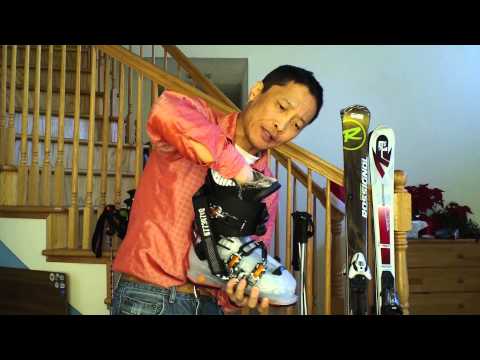
Boots are the single most important piece of ski equipment for comfort and control. Ill-fitting boots will ruin your day faster than any other equipment problem. Key considerations for beginners include ensuring the boots are snug but not painful, your heel should not lift when you flex forward, the flex rating should be soft to medium for beginners (around 60-80), and you should try boots on with the socks you plan to wear skiing.
Do not buy boots online without trying them first. Foot shape varies enormously and what works for one person may be agonizing for another.
Poles
Beginners often overlook poles, but they help with balance and rhythm. The right length is easy to determine: turn the pole upside down and grip it just below the basket. Your forearm should be roughly parallel to the ground. If a pole is too long, many models can be cut shorter.
Goggles and Helmet
Goggles protect your eyes from wind, snow, and UV radiation. Any reasonably priced pair with UV protection and anti-fog coating works for beginners. A helmet is strongly recommended — ski helmets are lightweight, warm, and can prevent serious head injuries from falls that are common during the learning process.
Rent or Buy Used
For your first season, renting is almost certainly the better financial decision. You do not know yet whether you will continue skiing, what type of skiing you prefer, or what equipment characteristics matter to you. Rental shops provide properly maintained gear with bindings adjusted for your specifications.
If you decide to buy, used equipment from ski swaps, consignment shops, or online marketplaces can save 50-70 percent versus new. Check that bindings are not too old to be adjusted (shops will not work on bindings past their indemnification date), boots have no cracks in the shell, and ski bases and edges are in reasonable condition.
For more outdoor adventure planning, see our guides on preparing for Europe travel and choosing gear for Hawaii trips.