 Genius Asian
 How to replace any car key battery, even using wrong size
How to replace any car key battery, even using wrong size
Key Takeaways
- Not only will I show you how to change various different key fob batteries, but also I will show you what to do if your batteries are thinner in thickness, thicker in thickness, or smaller in diameter
- This will help you to save money if you have some batteries of a different size that you bought for some other product that you no longer own
- No one wants to waste them
- Another benefit is saving time: learning this probably takes about as much time as going to the store to get a new battery, and is a skill that can be applied more than once, and may be useful for items other than key fobs as well
- If you already have these other (wrong-sized) batteries on hand, you can also avoid adding to e-wast (it takes more time and care to deal with battery waste)
Understanding the Basics
Modern keyless entry systems operate on multiple radio frequencies. The long-range signal (several hundred MHz) is what unlocks the doors from a distance and requires a healthy battery. A shorter-range signal (around 120 kHz) works near the door handle and needs less battery power. The emergency backup uses passive RFID technology, which requires no battery at all — the fob draws power from the car’s antenna when held very close to it. This is why even a completely dead fob can still start your engine if you know where to hold it. Most vehicles hide a physical key blade inside the fob for emergency door entry as well.
The DIY Advantage
Replacing a key fob battery costs about $3 to $5 and takes less than two minutes. A locksmith call for the same situation can cost $50 to $200 depending on your location and time of day. Knowing how to handle a dead fob battery yourself eliminates unnecessary stress and expense.
Tips for Best Results
Keep a spare fob battery in your glove compartment so you can replace it immediately when the low-battery warning appears. The most common fob batteries are CR2025 and CR2032. If your fob takes a CR2025, a CR2032 often fits and lasts longer due to slightly higher capacity. Avoid storing the fob near strong magnets, electronics, or cell phones, as these can drain the battery faster.
Video Chapter Guide
Here is a quick reference for the key sections covered in the video:
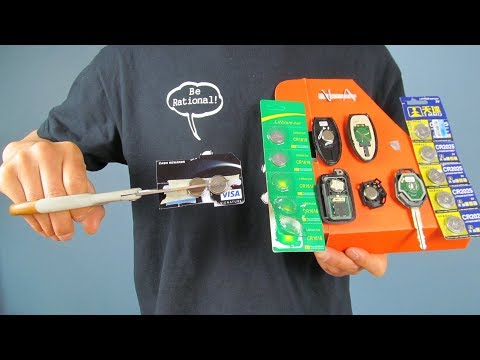
- 0:00 various car key fobs batteries
- 0:25 open Lexus IS250 key fob
- 1:00 coin battery CR1632
- 1:25 use CR1616 for CR1632
- 2:30 open Subaru key
- 2:50 button battery CR1620
- 3:10 use CR1616 for CR1620 need to match voltage, diameter & thickness
- 3:32 Nissan key fob uses CR2025
- 3:52 thicker CR2032 works for CR2025
- 4:18 use smaller diameter battery
- 7:19 4 key points for contacts
- 7:48 dead battery don’t panic
Use these timestamps to jump directly to the section most relevant to your situation.
More Practical Guides
Understanding your smart key system means a dead battery is a minor inconvenience rather than an emergency.
For more hands-on tutorials, check out our guides on changing transmission fluid and replacing front brake pads. Each one follows the same practical, no-nonsense approach to help you save money and build useful skills.