 Genius Asian
 How to troubleshoot car light problems, such as lights not turning off or one-on one-off.
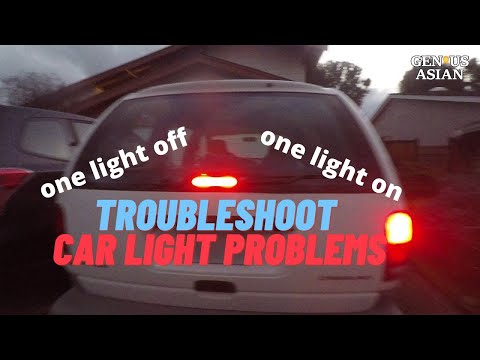
How to troubleshoot car light problems, such as lights not turning off or one-on one-off.
Key Takeaways
- Sooner or later your car is likely to have light problems
- It could be caused by bad light bulbs, fuses, switches, relays, battery , or simply loose or shorted wires
- The light problem might be that one side is on and the other side is off
- It could be that lights are always on or won’t turn on at all
- Or they could be flickering
Understanding the Basics
The car lighting system is a series of electrical circuits, each controlled by switches, relays, and fuses. Understanding which components are in each circuit helps you narrow down the problem quickly. If only one light is affected, the issue is likely the bulb, socket, or ground wire for that specific light. If an entire circuit is dead (for example, all brake lights), the fuse or relay for that circuit is the most likely culprit. If lights stay on when they should be off, the switch or relay that controls them is stuck.
Video Chapter Guide
Here is a quick reference for the key sections covered in the video:
- 0:00 car light overview problems
- 0:27 typical car light circuit diagram
- 0:47 problem 1: lights are always on
- 1:07 brake switch
- 2:13 three ways to force bulb off
- 2:55 problem 2: left light off & right light on
- 3:36 two lights in same bulb
- 4:30 all lights are off
- 5:26 other lights circuit diagram
- 5:46 lights flickering
Use these timestamps to jump directly to the section most relevant to your situation.
More Practical Guides
Systematic troubleshooting of car light problems is a valuable diagnostic skill that applies to many other electrical issues on your vehicle.
For more hands-on tutorials, check out our guides on changing transmission fluid and replacing front brake pads. Each one follows the same practical, no-nonsense approach to help you save money and build useful skills.