 Genius Asian
 Part 3 of 3, Water Tai Chi Cloudy Hand & its Push Hand Application
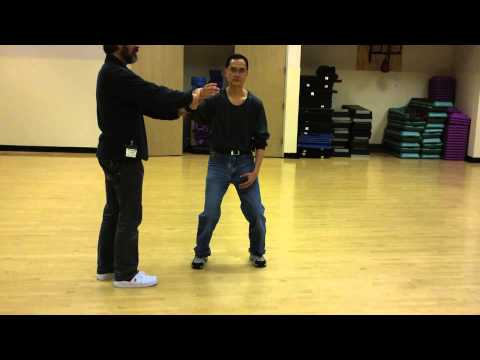
Water Tai Chi Cloudy Hand Part 3: Push Hand Application and Student Practice
Key Takeaways
- This is the final installment in the three-part Water Tai Chi Cloudy Hand series by Master Byron Zhang
- The video focuses on student practice and real-time corrections, making common mistakes visible and educational
- Cloudy Hand can be practiced independently regardless of your progress with other Tai Chi movements
- Learning from watching others’ mistakes is often more effective than watching perfect demonstrations
- The Water Tai Chi approach emphasizes community learning and sharing practice videos for feedback
What This Video Shows
In this third and final part of the Water Tai Chi Cloudy Hand series, Master Byron Zhang shifts the focus from demonstration to hands-on student training. If you have been following along with parts one and two, you should already have some practice under your belt. Now it is time to see how the movement looks when real students attempt it, and more importantly, how a master corrects their mistakes in real time.
The Cloudy Hand form, sometimes called Cloud Hands or Yun Shou, is one of the most recognizable movements in all of Tai Chi. The arms circle in alternating arcs while the body shifts weight from side to side. It looks deceptively simple, but the internal mechanics — weight transfer, waist rotation, coordinated breathing — make it one of the most challenging movements to execute properly.
Why Student Mistakes Matter
One of the most valuable aspects of this video is the chance to watch fellow students practice and receive corrections. When you only watch a master perform, you see the finished product. But when you watch students struggle, you recognize your own habits and blind spots.
Common issues Master Byron addresses include:
- Disconnected arm movement — moving the arms independently of the body’s core rotation
- Stiff shoulders — tension in the shoulders prevents the smooth circular path the hands should follow
- Rushing the weight shift — the body needs to settle fully into each side before transitioning
- Looking at the hands — the gaze should be soft and forward, not tracking the hand movement
Each of these corrections represents a principle that applies not just to Cloudy Hand but to every movement in the Tai Chi form.
The Push Hand Application
What sets this series apart from many Cloudy Hand tutorials is the push hand application. Master Byron demonstrates how the circular movement of Cloudy Hand translates directly into a defensive and offensive technique when practiced with a partner.
The circular path of the hands naturally redirects incoming force. When someone pushes toward your center, the Cloudy Hand motion captures their arm and redirects it to the side while your other hand moves into position. This is not a block — it is a redirection that uses the attacker’s momentum against them.
Understanding the martial application gives the solo form practice a deeper purpose. You are not just waving your arms in circles. Every arc has a specific function: deflecting, redirecting, or advancing.
Practicing On Your Own
The beauty of Cloudy Hand is its accessibility. Master Byron emphasizes that this move can be practiced independently. There is no prerequisite — you do not need to have mastered the full form or any other specific movement. You can start here and benefit immediately.
For effective practice:
- Start with slow, deliberate movements, focusing on smooth weight transfer
- Keep the arms relaxed — they should feel heavy, not stiff
- Coordinate the arm circles with the waist rotation
- Practice in front of a mirror or record yourself to check form
- Gradually increase the number of repetitions before increasing speed
If you want foundational context for this practice, check out the Tai Chi 108 Steps Form for the complete traditional sequence, or start with the 8 Section Brocade Qigong as a warm-up routine. For related push hand fundamentals, see our guide on how to use Taiji for push hand.