 Genius Asian
 Puuhonua o Honaunau National Historical Park In Big Island, Hawaii-UHD 4K
Puuhonua o Honaunau National Historical Park on the Big Island of Hawaii
Key Takeaways
- Puuhonua o Honaunau was a sacred place of refuge where Hawaiians who broke a kapu (ancient law) could avoid certain death
- The park contains one of Hawaii’s largest restored heiau (temples), the Hale O Keawe
- The grounds include temple platforms, royal fishponds, sledding tracks, and coastal village sites
- Defeated warriors and non-combatants could also find refuge here during times of battle
- The park is part of the National Park System and preserves centuries of Hawaiian cultural history
A Place of Refuge and Forgiveness
In ancient Hawaiian society, the kapu system governed every aspect of daily life. These sacred laws dictated what people could eat, where they could walk, who they could look at, and countless other behaviors. Breaking a kapu was punishable by death — no exceptions. But there was one escape: if the offender could reach a puuhonua, a place of refuge, they could be absolved by a priest and freed to leave.
Puuhonua o Honaunau on the west coast of the Big Island was one of the most important of these sacred sanctuaries. Surrounded by a massive hand-built wall on the landward side and the ocean on the other three sides, this puuhonua offered a chance at redemption for those who could reach it. The journey was often perilous — the offender had to evade pursuers and swim across the bay to reach the sanctuary.
Defeated warriors and non-combatants could also find refuge within these walls during times of battle. Once inside, they were protected and could not be harmed.
The Great Wall and the Hale O Keawe
The most striking feature of the park is the Great Wall, a massive stone structure approximately 10 feet high, 17 feet wide, and over 1,000 feet long. This wall separates the puuhonua from the royal grounds, where several generations of powerful chiefs lived and conducted affairs of state.
Within the puuhonua stands the Hale O Keawe heiau, a reconstructed temple originally built by a Kona chief named Kanuha in honor of his father, King Keaweikekahialiiokamoku. After the king’s death, his bones were entombed within the heiau. The presence of these royal bones imbued the site with tremendous spiritual power, or mana, which was believed to strengthen the sanctuary’s ability to protect those who sought refuge.
Archaeological Riches
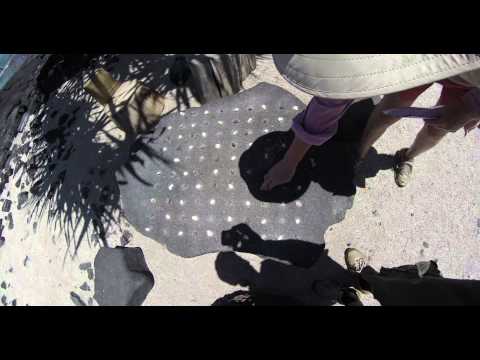
The park grounds contain a complex of archaeological sites that reveal much about how ancient Hawaiians lived. Temple platforms mark the locations of religious ceremonies. Royal fishponds demonstrate sophisticated aquaculture practices that sustained the ruling class. Sledding tracks carved into the lava rock show where chiefs practiced holua, a dangerous sport of sledding down steep slopes on narrow wooden sleds.
Coastal village sites reveal the daily life of commoners who lived and worked in the area. Walking through these ruins, you can begin to imagine the bustling community that once thrived here — fishermen launching canoes, families preparing food, and priests conducting ceremonies.
Visiting the Park
The park is located about 20 miles south of Kailua-Kona and is well worth a half-day visit. The self-guided walking tour covers all major sites and takes about one to two hours. Interpretive signs and occasional ranger-led talks provide context for what you are seeing.
The park is also popular for its excellent snorkeling near the boat ramp area. Green sea turtles frequently rest on the rocks along the shore, and you should maintain a respectful distance and never touch them.
For more travel adventures, check out our guide to the Carnival Breeze cruise ship or read our tips on preparing for Europe travel.