
video

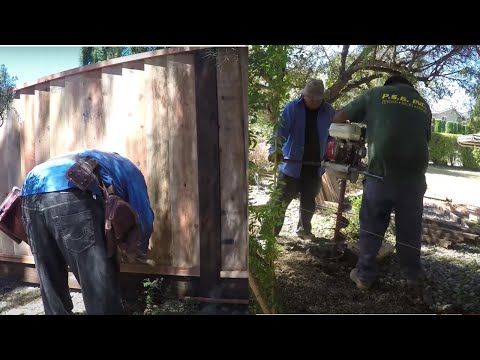
Quickest Way To Build A Fence In A Few Hours, Lessons Learned, in 4K UHD
By Genius Asian Updated

Quickest Way to Build a Fence in a Few Hours: Lessons Learned

Key Takeaways

  • Building a wood fence does not require many tools or advanced skills
  • The process can be very fast if you follow efficient techniques, but be aware of trade-offs
  • If hiring someone, watch this video first to write a better contract
  • Quick techniques may have drawbacks for long-term durability
  • Key considerations include property line verification, post depth, and rail spacing

Can You Really Build a Fence in a Few Hours?

Yes, with the right preparation and techniques. A basic wood fence section can be built surprisingly quickly once the posts are set. The time-consuming part is usually post-hole digging and concrete setting — but even this can be streamlined with the right approach.

The Quick Build Process

Post Installation: This is the foundation of your fence. Posts should be set in concrete at least one-third of their total length below ground. Quick-setting concrete allows you to move on to rails and boards within 30 minutes per post.

Rail Attachment: Horizontal rails connect the posts and support the fence boards. Two rails (top and bottom) are standard for fences up to 6 feet. Attaching rails with screws rather than nails is faster and produces a stronger connection.

Board Installation: Fence boards are nailed or screwed to the rails. Starting at one end and working methodically to the other, spacing boards consistently, is the key to a professional appearance.

Lessons Learned

Some quick techniques have trade-offs. Pre-assembled fence panels are faster to install but more expensive and less adaptable to terrain changes. Nails are faster than screws but can work loose over time. Shallow post holes are faster to dig but may not withstand wind or soil movement.

If You Are Hiring

Watch this video before hiring a contractor so you can write a more informed contract. Specify post depth, concrete requirements, hardware type (screws vs. nails), board spacing, and how property line alignment will be verified.

The DIY Mindset

The core principle behind all DIY projects is the willingness to try solving a problem yourself before paying someone else to do it. This mindset saves money, builds practical skills, and provides the satisfaction of self-sufficiency. Not every project will be perfect on the first attempt, but each attempt teaches something valuable for the next one.

Start with low-risk projects where a mistake will not cause serious damage or safety hazards. Kitchen repairs, simple plumbing fixes, basic electrical work (with the breaker off), and cosmetic improvements are good starting points. As your skills and confidence grow, you can take on more complex projects that save increasingly significant amounts of money.

Invest in quality tools gradually. You do not need to buy everything at once. Purchase each tool as a specific project requires it, and within a few years you will have a well-equipped workshop that was built incrementally rather than all at once. Quality tools last decades when properly maintained, making them one of the best investments a homeowner can make.

The DIY Mindset

The core principle behind all DIY projects is the willingness to try solving a problem yourself before paying someone else to do it. This mindset saves money, builds practical skills, and provides the satisfaction of self-sufficiency. Not every project will be perfect on the first attempt, but each attempt teaches something valuable for the next one.

Start with low-risk projects where a mistake will not cause serious damage or safety hazards. Kitchen repairs, simple plumbing fixes, basic electrical work (with the breaker off), and cosmetic improvements are good starting points. As your skills and confidence grow, you can take on more complex projects that save increasingly significant amounts of money.

Invest in quality tools gradually. You do not need to buy everything at once. Purchase each tool as a specific project requires it, and within a few years you will have a well-equipped workshop that was built incrementally rather than all at once. Quality tools last decades when properly maintained, making them one of the best investments a homeowner can make. For more DIY content, check out our guide on how to do bathtub caulking or learn about windshield crack repair.

Watch on YouTube →