 Genius Asian
 Sample Moves Bagua Dragon Flying Needle, Bagua, Xingyi and Taiji
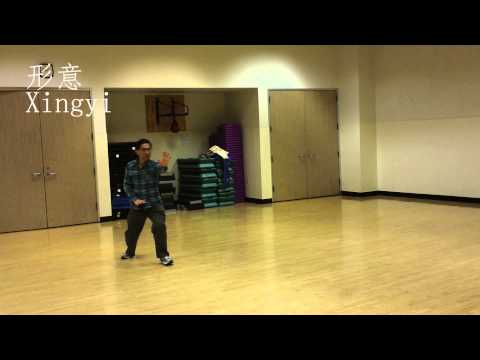
Sample Moves: Bagua Dragon Flying Needle, Bagua, Xingyi, and Taiji
Key Takeaways
- This video showcases short clips of Master He and his kungfu brother demonstrating moves from three distinct internal martial arts traditions
- Bagua, Xingyi, and Taiji each have a unique flavor and approach to generating power and controlling movement
- The Dragon Flying Needle is a specialized Bagua technique emphasizing circular movement and sudden directional changes
- These sample clips give beginners a visual introduction to the different internal styles
Understanding the Three Internal Arts
Chinese martial arts are broadly divided into external and internal styles. The three major internal arts — Baguazhang (Bagua), Xingyiquan (Xingyi), and Taijiquan (Taiji) — are often grouped together because they share underlying principles of internal energy cultivation, relaxation under pressure, and whole-body connected movement. However, each style has a distinct personality.
Baguazhang: The Art of Circle Walking
Bagua is built around the practice of walking in circles. Practitioners move around an imaginary center point, constantly changing direction while maintaining a low, stable stance. The Dragon Flying Needle technique demonstrated in this video combines circular walking with sudden linear strikes, creating an unpredictable attack pattern.
Key characteristics of Bagua include circle walking as the foundational practice, palm changes rather than punches as primary techniques, constant movement with no static postures during application, and twisting and coiling of the torso to generate power. The circle walking also serves as a meditative practice that develops balance, leg strength, and spatial awareness over time.
Xingyiquan: The Art of Five Elements
Xingyi is the most direct and aggressive of the three internal arts. While Bagua circles and Taiji yields, Xingyi advances in straight lines with explosive force. It is organized around five basic fist techniques corresponding to the Chinese five elements: metal, water, wood, fire, and earth.
Rather than relying on muscular strength, Xingyi practitioners generate force through coordinated whole-body movement and proper structural alignment. The stepping is heavy and rooted, each technique simultaneously defends and attacks, and the movements are compact with no wasted motion.
Taijiquan: The Art of Yielding
Taiji is the most widely practiced of the three internal arts, known worldwide for its slow, flowing forms. Beneath the graceful exterior lies a sophisticated martial system based on sensitivity, timing, and the redirection of incoming force. The Taiji movements in this video demonstrate softness overcoming hardness, continuous unbroken movement, and deep rooted balance maintained throughout every transition.
The concept of “listening energy” (ting jin) is central to Taiji practice. Through push hands training, practitioners develop the ability to sense an opponent’s intentions through physical contact, allowing them to respond with precisely the right amount and direction of force.
How the Styles Complement Each Other
Many serious internal martial artists study all three styles because they address different aspects of combat and body development. Bagua develops agility and the ability to fight from unusual angles. Xingyi develops explosive power and the ability to advance under pressure. Taiji develops sensitivity, timing, and the ability to neutralize incoming force.
Master He and his kungfu brother demonstrate in this video how each style has its own rhythm and feeling. Even in these short clips, you can see the fundamental differences in how they move, generate power, and occupy space. For practitioners, studying all three provides a more complete understanding of internal martial arts principles.
Getting Started
If you are interested in these arts, finding a qualified teacher is the most important step. Internal martial arts are difficult to learn from videos alone because so much depends on subtle body mechanics. A good teacher can feel what you are doing and guide your development effectively.
For more hands-on skills, check out our guide on how to do bathtub caulking or our tips on preparing for Europe travel.