 Genius Asian
 Taiji Push Hands Fun Game For Hip Rotation and Center Axis
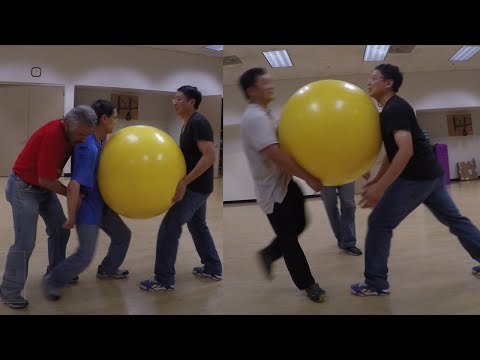
Taiji Push Hands Fun Game for Hip Rotation and Center Axis
Key Takeaways
- This game-based exercise develops hip rotation and center axis awareness in a fun, engaging way
- Hip rotation is fundamental to generating power in Taiji and redirecting incoming force
- Maintaining your center axis (vertical alignment) while rotating is a key skill for push hands
- Games make repetitive training more enjoyable and encourage longer practice sessions
- Partners of different skill levels can benefit from this exercise simultaneously
Why Hip Rotation Matters
In Taiji push hands, the hips are the engine of movement. Every redirect, every absorption of force, every counter-push originates from hip rotation around the center axis. Practitioners who move primarily with their arms or shoulders quickly run out of power and stability. Those who move from the hips can redirect enormous forces with minimal effort.
The center axis runs vertically through the body from the crown of the head to the perineum. Maintaining this axis while the hips rotate is the key to staying balanced during push hands exchanges. When the axis tilts, you become vulnerable to being uprooted.
The Game Format
Making training into a game transforms what could be tedious repetition into engaging practice. Partners face each other and attempt to disrupt each other’s balance using only hip rotation and weight shifts. The hands maintain light contact but do not push — all the action comes from the hips and waist.
The “winner” is the partner who can rotate and redirect while maintaining their center axis. The “loser” is the one whose axis tilts or who has to step to recover balance. This competitive element encourages faster learning because both partners are actively trying to find and exploit weaknesses.
Training Benefits
This exercise develops proprioception (awareness of your body’s position in space), hip mobility and rotation range, the ability to maintain vertical alignment under pressure, and sensitivity to a partner’s weight shifts and intentions. These skills transfer directly to free push hands practice and eventually to martial application.
The Journey of Internal Martial Arts Practice
Internal martial arts like Taiji, Bagua, and Xingyi require patience and long-term commitment to develop genuine skill. Unlike external martial arts where physical conditioning produces relatively quick results, internal arts demand that practitioners develop subtle body awareness, sensitivity to force, and the ability to move with integrated whole-body coordination. These qualities take years of consistent practice to cultivate.
The reward for this patience is a practice that continues to deepen throughout your lifetime. Many internal martial arts masters report that their skill continued to improve well into their sixties, seventies, and beyond. The art becomes richer with age rather than diminishing, because the principles of relaxation, sensitivity, and economy of movement become more refined over time.
Finding a supportive practice community is essential. Regular push hands practice with partners of varying skill levels provides the feedback needed for growth. Solo form practice develops body mechanics, but only partner work reveals whether those mechanics function under the pressure of real interaction. Seek out weekly practice groups, workshops, and seminars to supplement your regular training.
The Journey of Internal Martial Arts Practice
Internal martial arts like Taiji, Bagua, and Xingyi require patience and long-term commitment to develop genuine skill. Unlike external martial arts where physical conditioning produces relatively quick results, internal arts demand that practitioners develop subtle body awareness, sensitivity to force, and the ability to move with integrated whole-body coordination. These qualities take years of consistent practice to cultivate.
The reward for this patience is a practice that continues to deepen throughout your lifetime. Many internal martial arts masters report that their skill continued to improve well into their sixties, seventies, and beyond. The art becomes richer with age rather than diminishing, because the principles of relaxation, sensitivity, and economy of movement become more refined over time.
Finding a supportive practice community is essential. Regular push hands practice with partners of varying skill levels provides the feedback needed for growth. Solo form practice develops body mechanics, but only partner work reveals whether those mechanics function under the pressure of real interaction. Seek out weekly practice groups, workshops, and seminars to supplement your regular training. For more content, check out our guide on how to do bathtub caulking or explore preparing for Europe travel.