 Genius Asian
 Use 'Exaggerated' Taichi (Taiji) Form To Train Push Hands
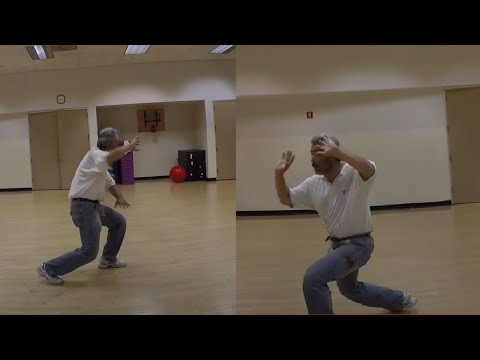
Using Exaggerated Taichi Form to Train Push Hands
Key Takeaways
- Standard Taiji forms from grand masters are so subtle that beginners cannot identify the real operative elements
- Exaggerated forms make the martial applications visible and understandable to students
- Master Byron presents various training options suited to different skill levels
- After reaching a new level, practitioners may need to unlearn previous training methods
- This approach bridges the gap between beautiful but opaque form work and practical push hands application
The Problem With Subtle Forms
Taiji is famous for its smooth, elegant forms. Grand masters move with such refinement that their demonstrations look effortless and beautiful. But for beginners trying to learn the martial applications hidden within those forms, this subtlety is actually a problem. The real elements — the weight shifts, the spiraling forces, the moments of connection and release — are so refined that they become invisible to the untrained eye.
This video addresses that problem directly by using exaggerated movements to make the martial content of each form position obvious and understandable.
How Exaggeration Helps Learning
By deliberately enlarging and emphasizing the movements within each form, Master Byron reveals the martial intention behind every gesture. A subtle hand rotation becomes a visible spiral. A small weight shift becomes a dramatic transfer of power. The connection between form and application becomes clear.
This teaching method is not about performing the form incorrectly. It is about using a larger version of the correct movement to educate the body and mind, then gradually refining toward the subtle, efficient movement of advanced practice.
Training at Your Level
In many of Master Byron’s videos, he presents various options for training. Some may suit your current state while others may be too simple or beyond your current comprehension. Master Wang Zhuang Hong expressed this concept well: when you have crossed the river, you no longer need the boat. After reaching a new level, you may need to unlearn or discard practices from the previous level.
This video is particularly useful for push hands practice, as it explicitly connects the solo form movements to their partner application. Each form position is shown first in its exaggerated solo version, then in its push hands context.
The Journey of Internal Martial Arts Practice
Internal martial arts like Taiji, Bagua, and Xingyi require patience and long-term commitment to develop genuine skill. Unlike external martial arts where physical conditioning produces relatively quick results, internal arts demand that practitioners develop subtle body awareness, sensitivity to force, and the ability to move with integrated whole-body coordination. These qualities take years of consistent practice to cultivate.
The reward for this patience is a practice that continues to deepen throughout your lifetime. Many internal martial arts masters report that their skill continued to improve well into their sixties, seventies, and beyond. The art becomes richer with age rather than diminishing, because the principles of relaxation, sensitivity, and economy of movement become more refined over time.
Finding a supportive practice community is essential. Regular push hands practice with partners of varying skill levels provides the feedback needed for growth. Solo form practice develops body mechanics, but only partner work reveals whether those mechanics function under the pressure of real interaction. Seek out weekly practice groups, workshops, and seminars to supplement your regular training. For more hands-on content, check out our guide on how to do bathtub caulking or explore preparing for Europe travel.