 Genius Asian
 8-energy 5 Steps 13 Postures, 八門五步 十三勢 (all)
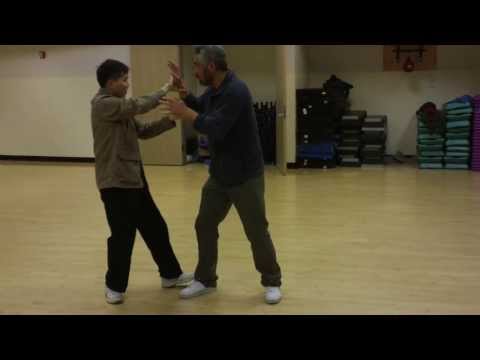
8-energy 5 Steps 13 Postures, 八門五步 十三勢 (all)
Key Takeaways
- The 8 Energies, 5 Steps, and 13 Postures form the foundational theoretical framework of Tai Chi
- The 8 Energies (Ba Men) represent eight fundamental ways of applying or responding to force
- The 5 Steps (Wu Bu) describe essential footwork and directional awareness
- Together these 13 elements describe the complete vocabulary of Tai Chi movement and force application
- Master Byron Zhang presents consolidated instruction and student practice reference material
Understanding the 13 Postures Framework
The concept of 13 Postures (Shi San Shi) is one of the oldest and most important theoretical frameworks in Tai Chi. Every movement in every Tai Chi form can be analyzed as a combination of these 13 fundamental elements. Understanding them transforms Tai Chi from a series of memorized movements into a coherent system with clear principles governing every action.
These are not 13 static poses but rather 13 dynamic qualities of movement and force that combine and recombine throughout every form and push hands exchange.
The 8 Energies (Ba Men / Eight Gates)
The 8 Energies are named after the eight trigrams of the I Ching and represent eight fundamental ways of handling force:
Peng (Ward Off): An expanding, upward energy creating structural integrity. Present in almost every Tai Chi posture, Peng is not muscular tension but an elastic quality — like an inflated ball that yields when pressed but immediately rebounds. Without Peng, your entire structure collapses.
Lu (Roll Back): A yielding, redirecting energy that draws the opponent’s force past you and off to the side. Lu is the primary defensive energy, embodying Tai Chi’s principle of not meeting force with force. It requires sensitivity to detect the direction of incoming force and redirect it along its existing trajectory.
Ji (Press): Forward-directed energy applied with both hands working together, one pressing against the other’s wrist. Ji focuses force into a concentrated point and is often used as a counterattack following Lu.
An (Push): A downward-then-forward energy using both palms, targeting the opponent’s center of gravity. An is the most commonly recognized pushing technique and demonstrates the principle of rooting before issuing force.
Cai (Pull Down): A sudden downward pull disrupting the opponent’s upward structure, typically targeting wrists, elbows, or shoulders. Cai exploits the natural tendency to resist in the opposite direction.
Lie (Split): A splitting force pulling in two opposite directions simultaneously, like tearing a piece of paper. Lie breaks the opponent’s structural connections and is extremely difficult to resist because force is applied in two directions at once.
Zhou (Elbow): Close-range pressing or striking with the elbow. When distance closes beyond the effective range of palm techniques, the elbow becomes the primary tool for applying force.
Kao (Shoulder): The closest-range energy using shoulder or torso. Kao typically follows when distance closes even further than elbow range, and uses the mass of the entire body behind the contact point.
The 5 Steps (Wu Bu)
Jin (Advance): Moving forward while maintaining root and structure, shifting the center of gravity forward deliberately. Tui (Retreat): Strategic backward movement to draw the opponent into overextension. Zuo Gu (Look Left): Turning attention and energy leftward through waist rotation and weight shifting that opens angles. You Pan (Gaze Right): The mirror of looking left, addressing the right side. Zhong Ding (Central Equilibrium): Maintaining your center as the foundation from which all movements originate and to which they return.
How They Combine
In practice, these elements rarely appear in isolation. A single movement might combine Peng energy with an advancing step and a leftward gaze. A defensive sequence might use Lu to yield, transition to Ji for counterattack, while maintaining central equilibrium throughout.
This consolidated video from Master Byron Zhang covers instruction and student practice that was originally in three separate parts, providing a complete reference.
For more Tai Chi concepts, see Wild Horse Shakes Its Mane and Fair Lady Works the Shuttles.