 Genius Asian
 Tai Chi (Tai Ji) Wild Horse Shakes Its Mane 野马分鬃
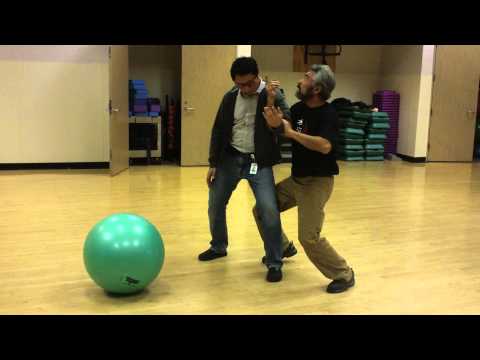
Tai Chi (Tai Ji) Wild Horse Shakes Its Mane 野马分鬃
Key Takeaways
- Wild Horse Shakes Its Mane is one of the most recognizable and important postures in the Tai Chi 24-form
- Master Byron Zhang demonstrates his interpretation of the movement’s mechanics and martial applications
- The posture involves a diagonal splitting energy combined with a forward step
- Proper execution requires coordination of the waist, legs, and arms as a unified whole
- Different Tai Chi styles may interpret this posture differently, and all interpretations have value
About Wild Horse Shakes Its Mane
Wild Horse Shakes Its Mane (Ye Ma Fen Zong) is one of the signature postures in Yang-style Tai Chi, appearing in the standard 24-form and the longer 108-form. The Chinese name literally translates to “wild horse parts its mane,” evoking the image of a horse tossing its head and spreading its mane to both sides as it runs.
This posture appears early in the 24-form and is repeated three times, alternating between left and right sides. Despite its graceful appearance, it contains significant martial content and teaches several fundamental Tai Chi principles.
The Movement Breakdown
The posture can be broken down into several phases:
Preparation: From the previous posture, shift your weight back and turn the waist to gather energy. The hands come together as if holding a ball, with one hand on top and the other below.
Step: Step forward and to the diagonal with the lead foot. The step should be controlled and deliberate, maintaining your center of gravity over the rear foot until the front foot is planted.
Separation: As you shift forward into a bow stance, the arms separate — the upper hand rises diagonally forward at shoulder height while the lower hand presses down and back beside the hip. The movement is driven by the waist rotation, not by the arms independently.
Completion: The energy extends through both arms simultaneously in opposite directions, creating a splitting force (Lie energy). The gaze follows the forward hand.
The Martial Application
The martial application of Wild Horse Shakes Its Mane involves a simultaneous upward deflection and downward pull. If an opponent grabs your wrist, the rising arm breaks the grip while the lower arm controls their elbow or pulls them off balance. The forward step enters their space, and the splitting energy disrupts their structure.
This combination of entering, splitting, and uprooting makes it one of the more practical self-defense applications in the Tai Chi form.
Common Mistakes
Arm-only movement: The most common error is moving the arms without engaging the waist. The arms should be driven by waist rotation and weight shifting, not by shoulder muscles.
Rising up during the step: Many practitioners straighten their legs during the forward step, losing the low, stable center that Tai Chi requires.
Leaning forward: In the completed bow stance, the torso should remain upright. Leaning toward the forward hand reduces your stability and limits your ability to issue power.
Disconnected upper and lower body: The step, the waist turn, and the arm separation should be one continuous, coordinated movement, not three separate actions performed in sequence.
Practice Tips
Practice this posture slowly, paying attention to the coordination between lower and upper body. Try performing the movement while imagining the ball between your hands — maintaining that connection until the very last moment of separation helps develop the internal connection that makes the posture effective.
Training Progression
When first learning Wild Horse Shakes Its Mane, focus on the stepping pattern and weight distribution before worrying about the arm movements. Once the lower body mechanics feel natural and stable, begin adding the arm separation, ensuring that the waist drives both the step and the arm movement as a unified whole. Practice each side independently before linking them into the repeating sequence. Video yourself from the front and side to check for common alignment errors that are difficult to feel from the inside. Over time, the posture should feel increasingly natural and powerful, with the martial application becoming apparent through the quality of your movement rather than through any conscious effort to apply technique.
For more Tai Chi posture analysis, see our article on Fair Lady Works the Shuttles and the 8 Energies, 5 Steps, and 13 Postures.