 Genius Asian
 Avoid Viruses With This Simple 3-Step Handwashing Method (And Other Tips)
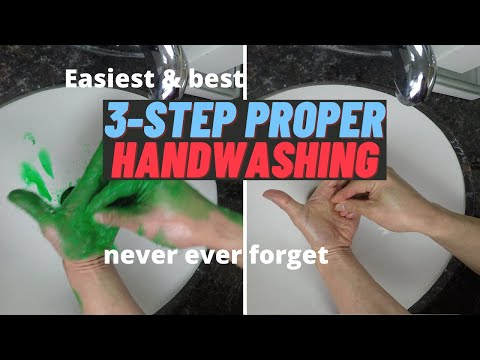
Avoid Viruses With This Simple 3-Step Handwashing Method
Have you ever tested how effective your handwashing actually is? You still catch a cold every year even though you swear you wash your hands thoroughly. In this video, Dr. David Zhang provides a way to test your handwashing effectiveness and introduces a simple 3-step method that most people can easily remember and execute.
Why 3 Steps Instead of 7
The World Health Organization recommends a 6-step handwashing technique, but studies show that most people cannot remember all the steps. Since the average person’s working memory holds only 3 or 4 items, Dr. Zhang distilled the essential handwashing movements into 3 memorable steps that cover the most commonly missed areas: between fingers, under nails, and the backs of hands.
Testing Your Technique
Dr. Zhang demonstrates a testing method using products that reveal whether your handwashing is truly removing contaminants from all surfaces of your hands. This visual feedback is powerful for teaching children and for adults to verify their own technique.
Why 20 Seconds Matters
The video explains the science behind the 20-second recommendation: soap needs time to break down the lipid membranes of viruses. Dr. Zhang clarifies where to start counting and how to time yourself without a timer.
Teaching Others
Teaching correct technique to people around you is important because germs from poorly-washed hands increase virus density in your environment. The visual testing method is particularly effective for convincing children to wash properly.
For more health and household tips, check out our guides on how to peel garlic easily without special tools and preparing for Europe travel.
Since we need to wash frequently, finding an efficient yet effective method is crucial. The 3-step approach takes the same 20 seconds but covers the critical areas that most people miss.
The Gel Food Colouring Test
You may get sick from a virus but not know how you got it. You swear you washed your hands very well — but this test can expose how bad your handwashing job actually is, or it may convince your children to wash their hands properly.
This is gel food colouring for cake decoration. You use the coloured gel as if it is the soap you use to wash your hands. Rub it onto your hands in the same way you would use soap. That way you can see if you are actually getting soap to all parts of your hands using your current methods.
Soap coverage is important because soap can destroy the outer layer of a virus or bacteria and make them inactive. That is why you need to keep your hands lathered for 20 seconds — it takes some time for the soap to act.
Now, rinsing hands covered in gel with plain water: there is still a fair amount of colouring left. This means water alone is not completely cleaning your hands. Demonstrating this to your kids once is better than yelling at them a thousand times to use soap.
Next, use real soap to wash the colour off and test your technique. It mostly washes off; however, there are some tough spots that are still there. This may have exposed your method’s weak point. It also indicates that coverage alone may not be enough — you need to focus more time scrubbing harder on certain areas. If you don’t have gel food colouring, you can mix some liquid soap with liquid food colour.
The 3-Step Handwashing Method in Detail
Since we need to wash frequently, no one wants to spend a lot of time, so finding an efficient and effective method is important. Since the average person’s working memory holds only three or four items, most people prefer not to memorise an instruction of seven steps. Here is a simple 3-step method.
Step 1 — Front. Use soap to lather the front, palm side of your hands. Rub your palms together, then open your fingers and interlace them to rub between your fingers.
Step 2 — Back. Scrub the backside of one hand, then the other hand’s backside. Open your fingers and interlace them to rub the backs of your fingers. Repeat for the other hand.
Step 3 — Fingers. Start rubbing the fingertips, then shift to the cuticles and the backs of the nails. Rub the thumbs. Repeat for the other hand.
Children usually have no problem remembering these three easy steps: front, back, fingers. The key words for each step are: front — interlace fingers; back — interlace fingers; fingertips, cuticle, thumb.
The Two-Step Fallback for Young Children
If your child cannot remember the three-step method but is patient enough to spend a longer time washing, you can teach a two-step method instead.
Step 1 — Front and back. Wash the front and back of both hands.
Step 2 — Each finger. Wrap and scrub each finger with the opposite hand, working from the base to the tip, then rub the tip. Repeat for each of the ten fingers.
When to Start the 20-Second Clock
You may have heard of the 20-second washing rule and wondered at what point you should start counting. You need to make sure the soap stays on your hands for at least 20 seconds before being rinsed off. The clock should start after you have lathered both the front and back of your hands.
The most common recommendation is to sing “Happy Birthday” twice to time the 20 seconds. Of course, singing or hearing “Happy Birthday” ten times a day may not be fun, so you may add some variety — for example, a counting chant: “Front and back, hence all your fingers, left ten, left hand, right hand, right hands in the morning, hands at night, left ten, left hand, left hand right, my hands your hands, many many hands, wet hand dry hand, many many hands need to be clean.”
Turning Off the Faucet Without Re-contaminating Your Hands
Remember: your hands are now clean. In order to turn off the faucet, you should use a paper towel after drying your hands. If a paper towel is not available, you may use your elbow — if the handle is an up-and-down or left-and-right lever. If the handle needs to be turned or pulled, you may have to use your hand; then remember that hand should not touch anything clean.
The WHO 6-Step Method
There are many different ways to wash your hands and they can all work. For example, the World Health Organization recommends the following six steps: rub hands palm to palm; right palm over left dorsum with interlaced fingers, and vice versa; palm to palm with fingers interlaced; backs of fingers to opposing palms with fingers interlocked; rotational rubbing of left thumb clasped in right palm, then right thumb in left palm; rotational rubbing with clasped fingers of right hand in left palm, and vice versa.