 Genius Asian
 Bow & Arrow Effect in Tai Chi (Tai Ji 蓄劲如张弓,发劲如放箭)
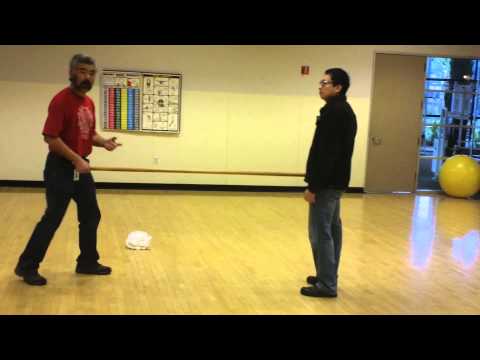
Bow & Arrow Effect in Tai Chi (Tai Ji 蓄劲如张弓,发劲如放箭)
Key Takeaways
- The bow and arrow metaphor is one of the most important concepts in classical Tai Chi literature
- It describes how energy is stored (like drawing a bow) and released (like shooting an arrow)
- Master Byron Zhang explains the physical mechanics behind this poetic concept
- The body itself becomes the bow — storing elastic energy through proper structural alignment
- Understanding this concept transforms push hands from a contest of muscular strength to an expression of stored elastic energy
The Classical Reference
The phrase appears in classical Tai Chi texts: “Store energy like drawing a bow, release energy like shooting an arrow” (xu jin ru zhang gong, fa jin ru fang jian). This poetic description captures one of the most fundamental principles of internal martial arts power generation, but its metaphorical language can make it difficult for modern practitioners to understand in practical terms.
Master Byron Zhang’s teaching bridges the gap between the classical poetry and physical reality, showing how the bow-and-arrow effect manifests in the body during push hands practice.
How the Body Becomes a Bow
A bow stores energy through elastic deformation — you pull the string back, bending the bow’s limbs, and the bent limbs want to snap back to their original shape. When you release the string, all that stored elastic energy transfers into the arrow, launching it forward with far more force than you could generate by simply throwing the arrow by hand.
The human body can function similarly. When you yield to a partner’s push in push hands, your body structure compresses and stores energy, much like drawing a bow. Your rear leg loads with the weight shift, your spine curves slightly to absorb the force, your tendons and fascia stretch under the load, and your joints align to create a spring-like structure.
The key insight is that this stored energy is not muscular tension — it is structural loading. A bow does not use muscles to store energy; it uses the material properties of the wood or composite. Similarly, the Tai Chi practitioner uses the elastic properties of tendons, fascia, and properly aligned skeletal structure rather than muscular contraction.
Releasing the Arrow
When the moment is right, the stored energy is released by allowing the compressed structure to spring back to its natural state. The force is not generated by muscular contraction but by the release of elastic tension. This is why Tai Chi masters can issue seemingly effortless force — the power comes from the release of structural energy, not from muscular effort.
The release happens through a coordinated sequence: the rear leg pushes the ground, the spine straightens, the compressed structure expands, and the force travels through the connected body to the point of contact with the partner. All of this happens in a fraction of a second, far faster than any deliberately muscular action could achieve.
Practicing the Bow and Arrow Effect
Solo Practice: Stand in a bow stance and slowly shift weight back as if yielding to a push. Feel the loading in the rear leg, the compression in the torso, and the stretch in the front leg. Then allow the structure to spring forward, carrying you into a forward weight shift. The movement should feel effortless once the structural loading is established.
Partner Practice: In push hands, allow your partner to push you while maintaining your connected structure. Feel the loading increase as you yield. When the loading reaches its natural limit, release it by allowing the structure to spring back. The partner should feel a sudden expansion of force that seems to come from nowhere.
Why Muscular Force Is Counterproductive
If you try to use muscular force during the loading phase, you prevent the structural compression that stores energy. Muscles that are actively contracting cannot simultaneously store elastic energy — they become rigid rather than springy. This is why relaxation is so heavily emphasized in Tai Chi: only a relaxed body can function as a bow.
For more on generating force in Tai Chi, see circular energy in push hands and merging three gravity centers.