 Genius Asian
 Crazy Optical Illusions With Water
Crazy Optical Illusions With Water
Key Takeaways
- A simple glass of tap water can create dramatic optical illusions that surprise and delight viewers
- The key phenomenon is refraction — light bending as it passes from air through water and glass
- Arrows and text appear to reverse direction when viewed through a water-filled glass
- The word “noon” behaves differently than arrows due to its palindromic and symmetric properties
- This makes an excellent science demonstration for children and curious adults
The Experiment
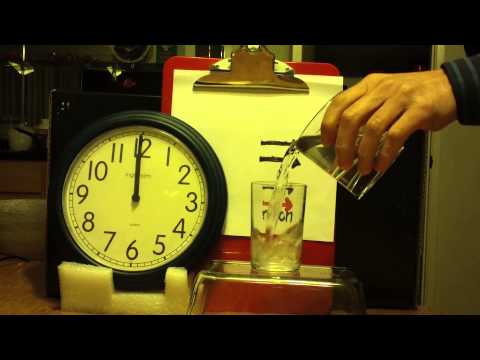
This experiment requires only two things: a glass of tap water and something with directional markings — arrows or text drawn on a piece of paper. Place the paper behind the glass of water and observe what happens to the image as you look through the water. The result is startling: arrows reverse direction, appearing to point the opposite way.
If you have never seen this effect, it genuinely seems impossible the first time. The arrow clearly points left, but viewed through the water it clearly points right. Moving the glass back and forth toggles the direction like a switch. The effect is immediate and unmistakable.
The Science: Refraction
The optical illusion is caused by refraction — the bending of light as it passes from one medium (air) to another (water and glass). A glass of water acts as a cylindrical lens. When light from the arrow passes through the curved surface of the water, it bends and crosses over itself, creating an inverted image.
Specifically, the water-filled glass acts as a converging lens in the horizontal direction. Light rays from the left side of the arrow bend toward the right, and rays from the right side bend toward the left. Past the focal point, the image is horizontally reversed. This is the same principle that makes your image appear inverted when looking at yourself in the back of a spoon.
The Palindrome Twist
The video also demonstrates an interesting variation using the word “noon.” Unlike arrows, the word “noon” has special properties — it reads the same forward and backward (a palindrome), and each of its letters is vertically symmetric. When viewed through the water, “noon” appears to remain unchanged, while arrows on the same paper clearly reverse.
This creates a particularly surprising visual: two items on the same piece of paper behave differently when viewed through the same glass of water. The explanation is that the reversal does happen to “noon” just as it happens to the arrows, but because the word is a palindrome with symmetric letters, the reversed version looks identical to the original.
Trying It Yourself
To reproduce this experiment, fill a clear glass with water, draw large arrows or write text on a piece of white paper, hold the paper about 6-12 inches behind the glass, and look through the glass at the paper. Move the glass closer and farther from the paper to see how the effect changes with distance. At certain distances, the image will be inverted; at others, it will be normal. Finding the transition point is part of the fun.
For more science experiments and curious discoveries, see our articles on the flame direction experiment in a car and baking soda vinegar rocket.