 Genius Asian
 Safest Baking Soda & Vinegar Rocket: The Safe Way
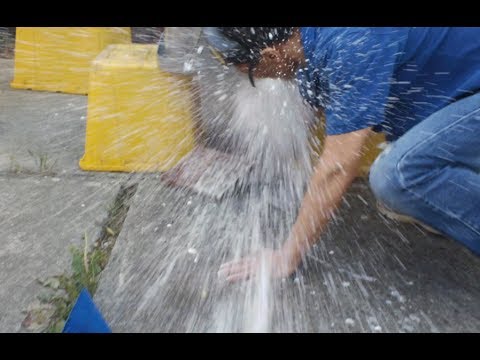
Safest Baking Soda & Vinegar Rocket: The Safe Way
Key Takeaways
- Baking soda and vinegar rockets are a classic science experiment that children love
- Safety is the primary concern — the method shown is designed to minimize risk while maximizing fun
- The chemical reaction produces carbon dioxide gas, which builds pressure inside a sealed container
- Understanding the science makes the experiment educational as well as entertaining
- Proper setup and adult supervision are essential for a safe and successful launch
The Science Behind the Rocket
When baking soda (sodium bicarbonate) reacts with vinegar (acetic acid), the chemical reaction produces carbon dioxide gas, water, and sodium acetate. The carbon dioxide gas is the key ingredient for the rocket — as gas accumulates in a sealed container, pressure builds until it exceeds the container’s ability to hold it, resulting in a rapid release of gas that propels the container in the opposite direction.
The reaction is the same one used in baking (where CO2 makes bread and cakes rise) and in the volcano science fair projects that generations of students have constructed. In this application, the goal is to harness the gas production for propulsion rather than leavening.
The Safe Method
Safety is the defining feature of this approach. Unlike some online tutorials that use glass bottles (which can shatter dangerously under pressure) or large containers that generate excessive force, this method uses appropriately sized plastic containers that fail predictably and safely.
Materials Needed
- A small plastic container with a tight-fitting lid (film canisters work perfectly if you can find them; small supplement containers also work)
- Baking soda
- White vinegar
- A flat outdoor surface with clear space around it
Setup
- Prepare the baking soda charge by wrapping a small amount in a piece of tissue paper. This delays the reaction, giving you time to seal the container and step back.
- Pour a small amount of vinegar into the container — approximately one-quarter full.
- Drop the tissue-wrapped baking soda into the vinegar.
- Quickly seal the lid and place the container upside down on the ground (lid down).
- Step back immediately and wait for the pressure to build.
The Launch
After several seconds (the timing varies based on the amounts used and how quickly the tissue dissolves), the pressure inside exceeds the lid’s holding capacity. The lid pops off and the container shoots upward, sometimes reaching heights of 20-30 feet. The surprise of the launch — you know it is coming but not exactly when — is half the fun.
Safety Rules
- Always perform the experiment outdoors with clear space above and around the launch area
- Never lean over the container while waiting for it to launch
- Never use glass containers under any circumstances
- Keep the quantities small — more is not better when it comes to pressure experiments
- Adult supervision is mandatory for children of all ages
The Educational Value
Beyond the excitement of the launch, this experiment teaches several scientific principles: chemical reactions between acids and bases, gas law relationships between volume, pressure, and temperature, Newton’s Third Law (every action has an equal and opposite reaction), and the engineering concept of designing for safe failure.
Extending the Learning
Once the basic rocket experiment is mastered, several extensions keep the learning going. Vary the ratio of baking soda to vinegar and measure the effect on launch height, teaching the concept of stoichiometry. Try different container sizes and shapes to see how volume and geometry affect pressure buildup and launch dynamics. Measure launch heights with a simple angle-measuring device to introduce trigonometry concepts. Compare the baking soda-vinegar reaction to other gas-producing reactions (like Alka-Seltzer in water) to explore reaction rates. Add food coloring to the vinegar for a more visual explosion. These extensions transform a single afternoon experiment into a multi-session science exploration that covers chemistry, physics, and mathematics concepts naturally and engagingly.
For more science experiments, see optical illusions with water and the flame direction experiment in a car.