 Genius Asian
 (Surprise!) Which Direction Will The Flame Point In A Car?
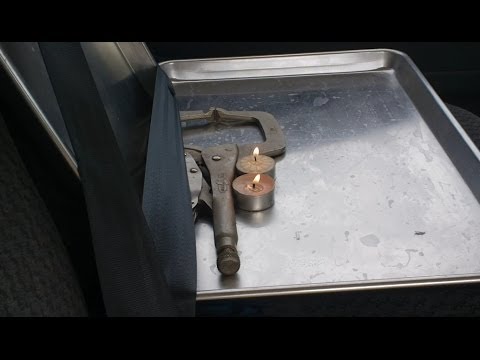
(Surprise!) Which Direction Will The Flame Point In A Car?
Key Takeaways
- When a candle burns inside a moving car, the flame direction is not what most people expect
- The flame appears to tilt forward when the car accelerates, not backward as intuition suggests
- This counterintuitive behavior is explained by the difference in buoyancy between the hot flame gases and the surrounding cooler air
- This experiment is an excellent educational tool for teaching children about physics, but fire safety must be taken seriously
- The experiment should be conducted with candles on a baking pan or other fireproof surface
The Surprising Result
Before watching, most people predict that a candle flame in a car will tilt backward when the car accelerates (just like you feel pushed back into your seat) and forward when the car brakes. This seems logical based on everyday experience with inertia.
The actual result is the opposite. When the car accelerates forward, the flame tilts forward. When the car brakes, the flame tilts backward. This counterintuitive behavior surprises nearly everyone who sees it for the first time.
Why the Flame Defies Intuition
The explanation involves the difference in density between the hot gases of the flame and the surrounding cooler air in the car.
When the car accelerates, inertia causes everything inside to experience a force pushing them backward (this is the pseudoforce we feel as passengers). Heavier objects (denser materials) experience this backward push more strongly than lighter objects. The cool air in the car is denser than the hot gases rising from the candle flame. So the cool air surges backward more forcefully than the hot flame gases.
This creates a pressure differential: higher pressure at the back of the car (where the cool air accumulates) and lower pressure at the front. The flame, being less dense, follows the pressure gradient and moves toward the lower pressure — toward the front of the car.
It is the same physics that causes a helium balloon in a car to move forward during acceleration. The balloon is less dense than the surrounding air, so it moves opposite to the direction that denser objects (including your body) move.
The Educational Value
This experiment brilliantly demonstrates several physics concepts in a visceral, memorable way. Inertia and pseudoforces become tangible when you feel them in a car. Density and buoyancy are illustrated through the contrasting behavior of the flame and your own body. Pressure differentials become visible through the flame direction.
For children, seeing something behave opposite to their prediction creates a powerful learning moment. The surprise captures attention, and the explanation that follows sticks in memory far more effectively than reading about buoyancy in a textbook.
Safety Precautions
This experiment involves open flame in an enclosed vehicle, which demands serious safety measures. Always place candles on a fireproof surface like a baking pan with raised edges. Never leave flames unattended. Have a fire extinguisher or water available. Ensure windows can be opened quickly if needed. Only conduct the experiment briefly and at low speeds with smooth acceleration and braking.
An adult should manage the flame at all times while another adult drives. Children should observe from a safe distance within the vehicle.
The Physics of Everyday Life
This experiment is part of a broader theme on the Genius Asian channel: discovering that fascinating physics is happening all around us, hidden in plain sight in everyday situations. From optical illusions with water to the behavior of fire in a moving vehicle, the world is full of phenomena that reward curiosity and careful observation.
For more science experiments, see crazy optical illusions with water and baking soda vinegar rockets.