 Genius Asian
 Do You Need Wheel Alignment? How Is It Done?
Do You Need Wheel Alignment? How Is It Done?
Key Takeaways
- Not every car needs a wheel alignment — it depends on the degree of toe, camber, and caster deviation
- Some vehicles have non-adjustable camber and caster by design, so paying for a full alignment package may waste money
- Modern alignment uses laser-guided machines that measure angles with high precision
- Toe is the most commonly adjustable and most impactful alignment parameter for tire wear
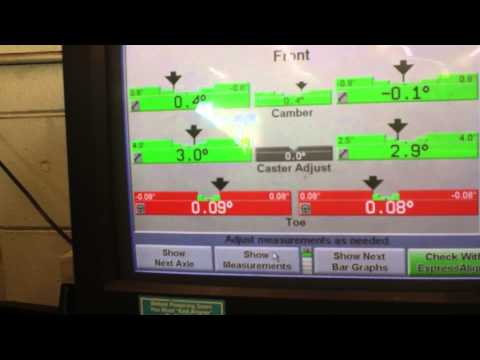
- The video demonstrates a professional alignment on a Honda Accord with over 150,000 miles
Do You Actually Need an Alignment
Many tire shops recommend a wheel alignment every time you buy new tires or every 12,000 miles. But not every car actually needs one, and understanding why can save you money. Wheel alignment refers to the precise angles at which your tires contact the road, defined by three measurements: toe, camber, and caster. Each has a manufacturer-specified range, and if your measurements fall within that range, an alignment adjustment provides zero benefit.
More importantly, not all of these angles are adjustable on every vehicle. On many cars, the camber and caster are set by the geometry of the suspension components and cannot be changed without installing aftermarket adjustable parts. If your car only has adjustable toe, paying for a “premium” or “four-wheel” alignment package that includes camber and caster adjustment is paying for work that cannot be performed.
The Three Alignment Angles
Toe: Whether the front edges of the tires point inward (toe-in) or outward (toe-out) when viewed from above. Incorrect toe is the most common cause of uneven tire wear and is adjustable on virtually all vehicles. Even small toe misalignment causes the tires to scrub sideways slightly with every rotation, wearing them unevenly.
Camber: Whether the top of the tire tilts inward (negative camber) or outward (positive camber) when viewed from the front. Negative camber improves cornering grip but can cause inner-edge tire wear if excessive. On many vehicles, camber is not adjustable without aftermarket components.
Caster: The angle of the steering pivot axis when viewed from the side. Caster primarily affects steering feel and straight-line stability rather than tire wear. Like camber, it is not adjustable on many production vehicles.
How Professional Alignment Works
The video shows the complete professional alignment process using a state-of-the-art laser alignment machine:
- The car is driven onto the alignment rack and the wheels are placed on turn plates and sliding plates that allow free movement
- Precision reflectors are mounted to each wheel
- The laser system measures the current toe, camber, and caster angles on all four wheels
- The technician compares the readings to manufacturer specifications
- Adjustments are made by turning the tie rod ends (for toe) and, where possible, adjusting the camber and caster eccentric bolts or cam bolts
- Final measurements are taken to verify all angles are within specification
For the Honda Accord shown in the video (at the 12:50 mark), the valid degree ranges for all three parameters are displayed, providing a useful reference for other Honda Accord owners.
When You Do Need an Alignment
Signs that your car may need alignment include uneven tire wear (especially on the inner or outer edges), the car pulling to one side on a straight road, the steering wheel being off-center when driving straight, and after any suspension component replacement or significant impact such as hitting a curb or large pothole.
Cost Considerations
A standard alignment at most shops costs $75-150. A four-wheel alignment with camber and caster adjustment runs $150-250 or more. Before agreeing to the premium service, ask the technician which angles are actually adjustable on your specific vehicle. If only toe is adjustable (common on many Honda, Toyota, and other popular models), you should only pay for a toe-only alignment. Knowing this distinction can save you $50-100 per alignment visit, and over multiple alignments during your vehicle’s life, the savings are substantial. Always ask for a printout of the before-and-after measurements so you can verify that adjustments were actually needed and performed correctly.
For more car maintenance guides, see how to replace Dodge Caravan front brake pads and Honda Accord brake fluid bleeding.