 Genius Asian
 Double Hands Basic Training Part 3
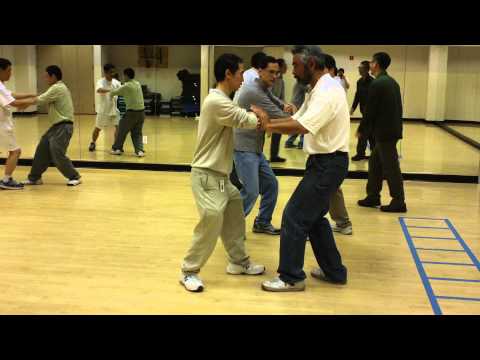
Double Hands Push Hands Basic Training Part 3
Key Takeaways
- Part 3 advances the double hands training with more complex patterns and variations
- Students begin to develop individual expression within the structured drill framework
- The balance between following the pattern and responding spontaneously starts to emerge
- Corrections address increasingly subtle aspects of technique and sensitivity
- This level of practice bridges basic drills and free-form push hands
What This Video Shows
The third installment in the double hands series represents a meaningful advancement in complexity. Students who have been through Parts 1 and 2 now have enough familiarity with the basic pattern to start working on variations and individual expression.
This is the stage where push hands begins to feel less like a choreographed drill and more like a living conversation between two practitioners. The structure is still there, but within it, moments of spontaneity begin to appear.
Bridging Structure and Spontaneity
The double hands basic pattern provides a framework, but real push hands requires the ability to deviate from the pattern when the moment demands it. Part 3 begins to introduce this flexibility:
- What happens when the pattern is disrupted by unexpected pressure?
- How do you return to the pattern after a spontaneous exchange?
- When should you follow the pattern and when should you follow the energy?
These questions do not have fixed answers. They develop through practice, and Part 3 provides the training ground for this development.
Student Progress
Watching the students in this video compared to Part 1 reveals clear progress. Their movements are smoother, their contact is more consistent, and they show less tension in their shoulders and arms. This visual evidence of improvement is encouraging for viewers following the series as their own training guide.
Building a Sustainable Practice
The journey of Tai Chi development is measured in months and years, not days and weeks. Here are principles that will serve you well regardless of where you are in your practice:
Consistency Over Intensity: Ten minutes of daily practice produces better results than a three-hour session once a week. Your nervous system needs regular input to build the pathways that make push hands and form work effective. Treat your practice like brushing your teeth — something you simply do every day, not something you negotiate with yourself about.
Quality Over Quantity: Slow, mindful repetitions with full attention are worth more than hundreds of distracted repetitions. When you practice, be present. Feel each weight shift, notice each point of tension, and consciously release what does not serve the movement.
Patience With Plateaus: Everyone hits periods where improvement seems to stall. These plateaus are not signs of failure — they are periods of integration where your nervous system is consolidating what it has learned. Continue practicing through plateaus and breakthroughs will come.
Community and Sharing: Tai Chi was traditionally learned in community, and that model remains the most effective. Practice with different partners, discuss your experiences, and share what you discover. The more perspectives you encounter, the richer your understanding becomes.
Moving Toward Free Practice
As you complete the basic training series, remember that the structured patterns are a means to an end, not the end itself. The goal is to internalize the principles so deeply that you can respond spontaneously to any situation. The patterns are the training wheels; free practice is riding the bicycle. Trust the process, continue your daily repetitions, and the transition from structured to free practice will happen naturally when you are ready. For the conclusion of this series, see Part 4. For the single-hand foundations, revisit push hands basic training Part 1.