 Genius Asian
 Tai Chi Push Hands Basic Training, Part 1
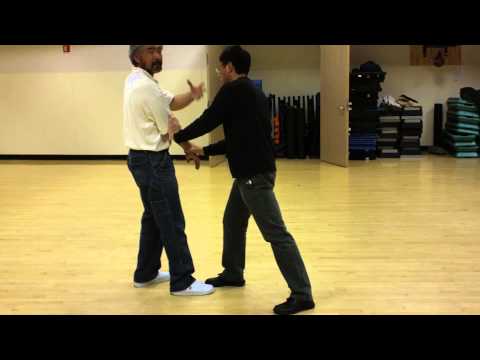
Tai Chi Push Hands Basic Training Part 1: Peng Lu Ji An with Master Byron Zhang
Key Takeaways
- This is the first installment of the Water Tai Chi Push Hands Basic Training series featuring Master Byron Zhang
- The lesson covers Peng Lu Ji An, the four fundamental energies of Tai Chi push hands
- Master Byron contrasts conventional Tai Chi form execution with the Water Tai Chi approach
- Each movement in this series can be practiced independently without prerequisite knowledge
- Pay close attention to the differences between the conventional and Water Tai Chi methods demonstrated
What This Video Shows
Master Byron Zhang opens this foundational training series by showing you something unusual: he first demonstrates how Tai Chi form is commonly done in most schools, and then he shows you how Water Tai Chi does it differently. This side-by-side comparison is the heart of the lesson.
The four energies covered — Peng (ward off), Lu (roll back), Ji (press), and An (push) — form the backbone of all push hands practice. Every push hands exchange involves some combination of these four. Master them, and you have the building blocks for everything that comes after.
The Water Tai Chi Difference
Most Tai Chi schools teach Peng Lu Ji An as a series of distinct positions. You move from one shape to the next, trying to match the external form of the teacher. The Water Tai Chi approach is fundamentally different.
In Water Tai Chi, the emphasis is on internal mechanics rather than external shape. The movement should emerge from weight shifting and whole-body coordination, not from muscular effort in the arms. Master Byron demonstrates how the same Peng Lu Ji An pattern looks and feels different when driven by internal principles rather than external form matching.
Key differences you will notice:
- Fluidity: The Water Tai Chi version flows continuously without distinct stops between positions
- Root connection: Every movement originates from the ground through the feet and legs
- Relaxation: The arms and shoulders remain soft throughout, acting as conduits rather than engines
- Weight integration: The body weight itself generates the power, not muscular pushing
How to Practice After Watching
After watching the full demonstration, follow these steps to begin your own practice:
- Stand in a comfortable stance with feet shoulder-width apart, one foot slightly forward
- Start with the Peng energy — extend one forearm forward and upward as if creating a protective barrier
- Transition to Lu — draw the hand back while turning the waist, as if rolling something off your arm
- Move into Ji — press forward with both hands aligned, weight shifting to the front foot
- Complete with An — push downward and forward, letting your body weight carry the movement
The key is to practice slowly and focus on the weight shift rather than the arm positions. If your arms are working hard, you are doing it wrong. The arms should feel almost passive, moved by the body’s rotation and weight transfer.
This is part one of six in the basic training series. For the continuation, move on to Part 2 where Master Byron shows solo practice methods. For broader context on push hands fundamentals, see the push hands basic training overview.