 Genius Asian
 Double Hands Basic Training Part 4
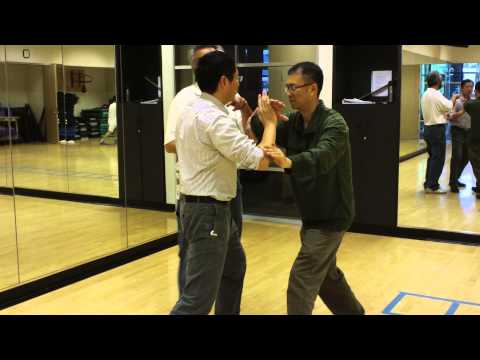
Double Hands Push Hands Basic Training Part 4
Key Takeaways
- Part 4 concludes the double hands basic training series
- Students demonstrate measurable improvement from Part 1 through Part 4
- The conclusion sets the stage for free-form double hands push hands practice
- The structured training provides a solid foundation for more advanced two-person work
- Consistent practice through the entire series builds the coordination necessary for effective double hands work
What This Video Shows
The concluding installment of the double hands basic training series brings together everything developed in the previous three parts. Students who have progressed through the complete series show clear improvement in coordination, sensitivity, and responsiveness.
This final part serves as both a culmination of the basic training and a bridge to more advanced practice. The structured patterns learned in this series become the vocabulary for free-form push hands exchanges.
Progress Through the Series
Comparing student performance from Part 1 to Part 4 reveals the value of systematic, progressive training. The initial awkwardness and tension have been replaced by smoother, more confident movement. Contact is more consistent, transitions are more fluid, and the beginning of genuine sensitivity is visible.
This progress validates the training approach: start simple, drill thoroughly, add complexity gradually, and trust that skill develops through repetition.
What Comes Next
With double hands basic training complete, practitioners are prepared for:
- Free-form double hands push hands with varying levels of resistance
- Integration of double hands skills into the broader push hands practice
- Application of double hands concepts in the Tai Chi form
- More advanced partner training with increased spontaneity
Building a Sustainable Practice
The journey of Tai Chi development is measured in months and years, not days and weeks. Here are principles that will serve you well regardless of where you are in your practice:
Consistency Over Intensity: Ten minutes of daily practice produces better results than a three-hour session once a week. Your nervous system needs regular input to build the pathways that make push hands and form work effective. Treat your practice like brushing your teeth — something you simply do every day, not something you negotiate with yourself about.
Quality Over Quantity: Slow, mindful repetitions with full attention are worth more than hundreds of distracted repetitions. When you practice, be present. Feel each weight shift, notice each point of tension, and consciously release what does not serve the movement.
Patience With Plateaus: Everyone hits periods where improvement seems to stall. These plateaus are not signs of failure — they are periods of integration where your nervous system is consolidating what it has learned. Continue practicing through plateaus and breakthroughs will come.
Community and Sharing: Tai Chi was traditionally learned in community, and that model remains the most effective. Practice with different partners, discuss your experiences, and share what you discover. The more perspectives you encounter, the richer your understanding becomes.
Integrating Double Hands Into Your Overall Practice
Double hands skills do not exist in isolation. They integrate with everything else you practice — your form, your root stand, your single-hand push hands. The coordination developed through double hands training improves all of these related skills. As you move forward, notice how the bilateral awareness you developed here shows up in unexpected areas of your practice. The body learns as a whole, even when you train specific skills. For the complete series, start with Part 1. For single-hand foundations, see the push hands basic training series. For the philosophical framework behind this training, explore Song Kong Yuan Man.