 Genius Asian
 How to Breathe in Taiji Push Hands Practice Incorporating Relaxation
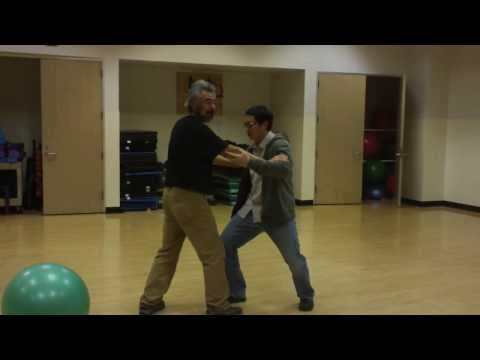
How to Breathe in Taiji Push Hands Practice Incorporating Relaxation
Key Takeaways
- Proper breathing is essential for effective Tai Chi push hands practice but is often neglected by beginners
- The breath should coordinate with movement: inhale while yielding and gathering, exhale while issuing and expanding
- Forced or held breathing creates tension that undermines the softness Tai Chi requires
- Incorporating breath awareness into push hands practice deepens relaxation and improves both sensitivity and power
- Different Tai Chi styles may approach breathing slightly differently, but the fundamental principles are consistent
Why Breathing Matters in Push Hands
Most Tai Chi beginners focus on external movement — where to place the hands, how to shift weight, when to push and when to yield. Breathing is treated as something that will take care of itself. But in push hands practice, breathing is not just background physiology; it is an active component of technique that directly affects your ability to relax, generate power, and sense your partner’s intentions.
When you hold your breath — which most people do unconsciously when concentrating or under physical pressure — your muscles tense, your body becomes rigid, and you lose the sensitivity that Tai Chi push hands requires. A skilled partner can feel the moment you hold your breath because your body stiffens noticeably, and that stiffness creates an opportunity they can exploit.
The Basic Breathing Pattern
Master Byron Zhang teaches a breathing pattern coordinated with the fundamental push hands cycle:
Inhale During Yielding: When your partner pushes and you yield or redirect their force, breathe in. The inhalation naturally supports the gathering, contracting quality of yielding. Your body draws inward, your center settles, and you collect the incoming energy.
Exhale During Issuing: When you push, press, or issue force, breathe out. The exhalation supports the expanding, releasing quality of pushing. Your body opens outward, your energy extends, and you project force toward your partner.
This coordination is not arbitrary — it mirrors the body’s natural patterns. Exertion (pushing a heavy object, throwing a punch, lifting a weight) is naturally accompanied by exhalation. Absorbing force (catching a heavy object, receiving a blow) is naturally accompanied by inhalation.
Incorporating Relaxation
The deeper aspect of breathing in push hands is its relationship to relaxation. Master Byron Zhang emphasizes that each exhale should carry away tension from the body, and each inhale should bring fresh ease and softness. Over the course of a push hands session, this progressive relaxation allows you to become increasingly soft and sensitive.
The Relaxation Sequence
- Begin with awareness: Simply notice your breathing without trying to change it
- Release obvious tension: On each exhale, consciously release tension from the shoulders, chest, and arms
- Deepen gradually: As surface tension releases, begin directing attention to deeper layers — the hip joints, the lower back, the ankles
- Coordinate with movement: Once breathing and relaxation are established, synchronize them with the push hands exchange
- Let the breathing lead: Eventually, the breath becomes the conductor and the movement follows naturally
Common Breathing Mistakes
Reverse breathing: Some practitioners breathe in when they push and out when they yield, which creates internal conflict between the breath and the movement.
Chest breathing: Shallow breathing that moves only the upper chest does not engage the diaphragm and does not support the deep relaxation that Tai Chi requires. The breath should be felt in the lower abdomen (dantian breathing).
Forced rhythm: Trying to maintain a rigid breathing pattern regardless of the push hands tempo creates its own form of tension. The breath should adapt to the rhythm of the exchange.
Breath holding under pressure: The most common mistake, especially when a partner pushes harder than expected. The natural reflex to hold the breath must be consciously overcome through practice.
For more push hands principles, see practicing push and receiving push and gravity center in form training.