 Genius Asian
 Taiji (Taichi) Gravity Center in Form Training
Taiji (Taichi) Gravity Center in Form Training
## Key Takeaways- Understanding and controlling the gravity center is one of the most fundamental skills in Taiji (Tai Chi) form training
- Using a ball as a training aid helps practitioners feel and visualize the movement of their center of gravity
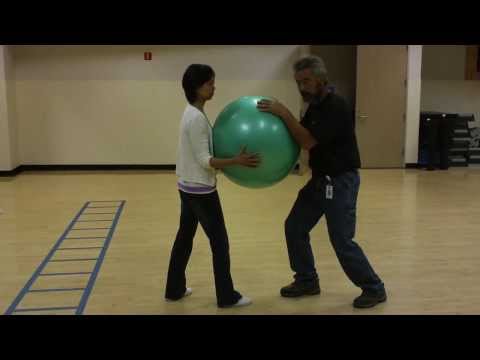
- Master Byron Zhang demonstrates how the gravity center shifts during transitions between postures
- Maintaining a low, stable center of gravity improves both balance and the ability to generate power
- Different Tai Chi styles may interpret gravity center training differently, but the core principles remain consistent
Why Gravity Center Matters in Taiji
The gravity center, sometimes called the center of mass, is the single most important physical concept in Tai Chi practice. Every movement in a Tai Chi form involves shifting, lowering, or stabilizing your gravity center. If your center is too high, you are easily uprooted. If it drifts to one side without intention, you lose balance. Mastering the control of your gravity center is what separates a beginner who is simply moving their arms from a practitioner who is genuinely doing Tai Chi.
In push hands practice, your partner is constantly trying to find and disrupt your center. In form practice, you are training yourself to move your center smoothly and deliberately, so that when the time comes for partner work, these movements are second nature.
The Ball Training Method
In this video, Master Byron Zhang introduces a practical training aid: a ball. The ball serves as a physical representation of your gravity center. By holding or balancing the ball during form practice, you develop a tangible sense of where your center is at any given moment.
The key insight is that the ball forces you to be honest about your movements. If you are leaning too far forward, the ball will shift. If your weight transition is choppy or abrupt, you will feel it through the ball. This immediate feedback loop is far more effective than simply trying to feel your internal balance, which can be vague and misleading for beginners.
How to Practice with the Ball
- Start in a standing posture with the ball held at your dantian (lower abdomen) level
- Begin a simple weight shift from one foot to the other, keeping the ball level and centered
- Progress to basic form movements such as brush knee or ward off, maintaining awareness of how the ball moves
- Focus on smooth transitions rather than end positions — the moments between postures are where gravity center control matters most
- Practice at slow speed so you can observe every subtle shift
The Three Components of Gravity Center Control
Master Byron Zhang’s teaching emphasizes three interconnected aspects of gravity center management:
Vertical Position: How high or low your center sits. In Tai Chi, we generally want to sink the center by bending the knees and relaxing the hip joints. A lower center provides greater stability, but going too low sacrifices mobility. Finding the right balance for your body and skill level is essential.
Horizontal Position: Where your center sits relative to your base of support (the area between and around your feet). During a bow stance, your center should be roughly over the midpoint. During a single-leg stance, it must be directly over the standing foot.
Transitions: How your center moves from one position to another. This is where most practitioners struggle. The center should move along a smooth, continuous path without sudden jumps or pauses.
Common Mistakes
Many beginners focus too much on arm and hand positions while ignoring what is happening with their center. Specific mistakes include rising up during transitions, leaning forward past the front knee in bow stances, and rushing through weight shifts. The ball training method helps identify and correct all of these errors.
Connecting Form Training to Push Hands
The gravity center skills developed in form training translate directly to push hands practice. When a partner pushes you, your ability to absorb and redirect the force depends entirely on how well you can control your center.
For more on developing your Tai Chi push hands skills, see our articles on how to breathe in Taiji push hands practice and the bow and arrow effect in Tai Chi.