 Genius Asian
 How To Practice Push & To Receive Push
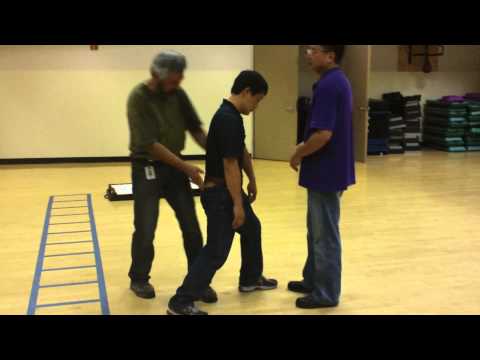
How To Practice Push & To Receive Push
Key Takeaways
- Practicing how to push and how to receive a push are two distinct but complementary skills in Tai Chi push hands
- Master Byron Zhang demonstrates techniques for delivering force effectively and absorbing force without resistance
- The key to receiving a push is yielding and redirecting incoming energy rather than bracing against it
- Both partners benefit from structured practice — the pusher learns to find the center, the receiver learns to protect it
- Regular partner practice is essential, but solo drills can supplement and prepare you for push hands work
The Two Sides of Push Hands
Push hands (Tui Shou) is the partner practice bridging solo Tai Chi form work and real-world application. Most beginners focus on pushing — trying to uproot or unbalance their partner. But Master Byron Zhang emphasizes that learning to receive a push is equally important, and arguably more difficult to master.
A good pusher can unbalance an untrained opponent easily. But a skilled receiver can neutralize even a powerful push, leaving the pusher off balance instead. This embodies Tai Chi’s principle of using four ounces to deflect a thousand pounds.
How to Practice Pushing
Effective pushing in Tai Chi is not about muscular force. It is about finding your partner’s center of gravity and applying force in a direction that disrupts their structure. Key principles include:
Connect Before You Push: Establish contact and feel where their weight sits, how their structure is aligned, and where they are strong versus weak. This sensitivity is called “ting jin” or listening energy.
Use Whole-Body Force: The push should originate from the ground, travel through your legs and torso, and express through your arms. Pushing only with your arms uses a fraction of your potential and is easily countered by a skilled partner.
Push Through the Center: Target the dantian area at the lower abdomen. Pushing above the center causes them to lean back but recover. Pushing through the center uproots them completely. This targeting skill takes years to develop.
Time Your Push: The best moment to push is when your partner is in transition between postures, when their weight is shifting, or when they have just committed their force in one direction. Pushing against their strongest position wastes your energy.
How to Receive a Push
Receiving a push is where Tai Chi’s internal principles truly come into play. The natural human reaction is to tense up and resist, which is exactly wrong for Tai Chi. Master Byron Zhang demonstrates several essential approaches:
Yield Without Collapsing: Allow your body to move with the force rather than against it, while maintaining internal structure. Redirect the incoming force to the ground through your back foot. This is different from simply being pushed backward — you are absorbing and grounding the force.
Redirect Rather Than Absorb: Use subtle waist rotations and weight shifts to send the force off to one side. The push should pass through you and dissipate, not accumulate in your body. Think of turning a door rather than trying to stop a battering ram.
Maintain Root: Even while yielding, your feet should remain connected to the ground. If the push lifts your heels or causes uncontrolled stepping backward, your receiving technique needs improvement. Root comes from relaxation, not tension.
Stay Relaxed in the Shoulders: Tension in the shoulders creates a rigid connection between the incoming push and your center. Relaxed shoulders allow force to dissipate before reaching your core. This is one of the hardest habits to develop because shoulder tension is deeply ingrained in most adults.
Solo Practice Drills
For those without a regular partner, several solo drills develop the body awareness needed: wall push practice to feel force traveling from feet through the body, slow controlled weight shifting between feet while maintaining level hips, waist rotation while keeping feet stable, and progressive sinking relaxation from head to feet that develops the quality of heaviness that makes you harder to uproot.
The Value of Both Roles
In good push hands practice, both partners benefit regardless of who pushes and who receives. The pusher develops sensitivity to detect weaknesses. The receiver develops the ability to neutralize force. As both skills improve, the exchange becomes increasingly nuanced and both practitioners advance faster.
For more on push hands fundamentals, see our articles on gravity center in form training and breathing in Taiji push hands.