 Genius Asian
 Part 3, Tai Chi Push Hands & Physiology of the Brain
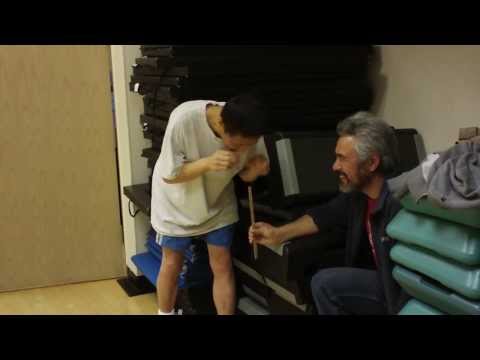
Tai Chi Push Hands and Brain Physiology Part 3: Reaction Time and Neural Processing
Key Takeaways
- This video explores the neuroscience behind Tai Chi push hands, connecting brain physiology to martial arts performance
- The lesson covers four topographical brain regions, Brodmann Areas, and myelination
- Touch reaction time is faster than visual reaction time, which explains why push hands emphasizes feel over sight
- Reflexes bypass conscious processing entirely, making them the fastest response pathway
- Parallel processing models explain how Tai Chi training can improve overall reaction speed
What This Video Shows
This is a fascinating crossover between neuroscience and martial arts. Part 3 of the Tai Chi Push Hands and Brain Physiology series dives into the specific brain mechanisms that make push hands effective as a training method. After watching, you should be able to answer seven key questions about how your brain processes physical interactions.
The video bridges the gap between ancient martial arts wisdom and modern neuroscience, showing that traditional training methods often align with what science now understands about neural processing.
The Brain Science Behind Push Hands
The core insight of this lesson is that different sensory inputs reach the brain at different speeds, and this has profound implications for martial arts training.
Reaction Time Hierarchy:
- Reflexes are the fastest — they do not even reach the conscious brain, being processed in the spinal cord
- Touch reactions are faster than auditory reactions
- Auditory reactions are faster than visual reactions
- Visual reactions are the slowest of the primary senses
This hierarchy explains a fundamental principle of push hands: the practice emphasizes tactile feedback (touch) over visual observation. When you are in physical contact with your partner, you receive information through touch faster than you could by watching their movements. This speed advantage can mean the difference between successfully redirecting a push and being caught off guard.
Brodmann Areas and Myelin
The video introduces Brodmann Areas — the mapped regions of the cerebral cortex that handle specific functions. Understanding which brain regions process tactile information helps explain why push hands training develops particular neural pathways.
Myelin, the insulating sheath around nerve fibers, plays a crucial role in processing speed. More myelinated pathways conduct signals faster. Repeated practice of push hands movements builds myelin around the relevant neural pathways, literally making your brain faster at processing the information needed for effective push hands.
Serial vs. Parallel Processing
The video discusses two models of reaction time: serial processing (handling one input at a time) and parallel processing (handling multiple inputs simultaneously). Tai Chi push hands training develops parallel processing ability — you learn to feel pressure, detect direction, sense weight shifts, and prepare a response all simultaneously rather than sequentially.
This parallel processing advantage is what makes experienced push hands practitioners seem to respond almost instantaneously. They are not faster in any single channel; they are processing multiple channels at once.
Practical Implications for Training
Understanding the neuroscience suggests specific training strategies:
- Practice with eyes closed to prioritize tactile processing pathways
- Focus on developing sensitivity to light touch rather than strong pressure
- Repeat drills thousands of times to build myelinated neural pathways
- Train with multiple partners to develop flexible parallel processing
For the foundational push hands techniques that these neural pathways support, see the basic training series. For the practical application of weight shifting and sensitivity, explore the power delivery through weight shifting series.