 Genius Asian
 Pigeons at St. Mark's Square (Piazza San Marco), Itlay. Travel Tips for a Short visit
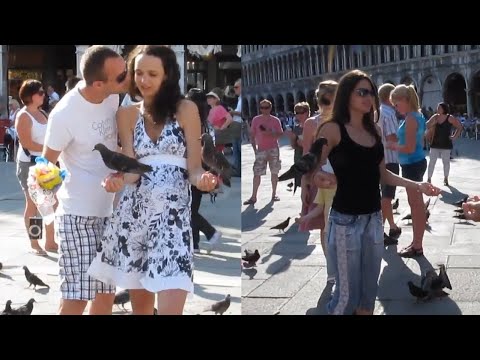
Pigeons at St. Mark’s Square (Piazza San Marco): Venice Travel Tips for a Short Visit
Key Takeaways
- The pigeons of St. Mark’s Square are one of Venice’s most iconic (and controversial) features, with an estimated 100,000 pigeons across the city outnumbering the 60,000 human residents.
- Feeding the pigeons in Piazza San Marco is now illegal. Vendors who once sold pigeon food in the square have been banned.
- Despite the ban, the pigeons remain a beloved part of the square’s atmosphere, and watching them interact with visitors is an entertainment in itself.
- The pigeon population has been a source of ongoing tension between tourism appeal and the need to protect Venice’s historic buildings from bird-related damage.
- Enjoy the pigeons visually and photographically, but keep your food put away and resist the temptation to feed them.
The Famous Pigeons of Venice
If you have ever seen a photograph of Piazza San Marco, chances are there were pigeons in it. For centuries, the pigeons of St. Mark’s Square have been as much a part of the Venetian experience as gondolas, glass, and gelato. They are everywhere: on the ground, on shoulders, on outstretched arms, on heads, and in vast swirling flocks that lift off from the pavement and circle overhead before settling back down.
The scene in the square is something you have to witness to fully appreciate. Children chase them, sending waves of birds scattering across the pavement only to land a few meters away and resume their business. Tourists pose with pigeons perched on their arms, trying to coax one more bird onto an outstretched hand for the perfect photo. The birds are remarkably tame, having been fed and handled by visitors for generations, and they show little fear of humans.
During our visit, we watched one particularly enthusiastic boy work the square like a professional pigeon wrangler. First one pigeon on his right arm, then one on his left, then two at once. His delight was infectious. “I got a pair!” he shouted, arms outstretched, a pigeon balanced on each forearm. It was the kind of spontaneous, joyful travel moment that no itinerary can plan for.
A Brief History of Venice’s Pigeon Population
The pigeons of Venice have deep historical roots. According to local tradition, the birds were considered sacred messengers and were protected by law. The Venetian government reportedly even provided grain for the pigeons in the square, ensuring a stable population that became a living symbol of the city.
Over the centuries, the pigeon population grew steadily. By the modern era, estimates put the number of pigeons across Venice at around 100,000, a remarkable figure for a city with a human population of only about 60,000. The birds had established colonies throughout the city, roosting on historic buildings, nesting in bell towers, and congregating in every open space where food might be found.
For much of the 20th century, the relationship between Venice and its pigeons was treated as charming. Vendors sold bags of corn and birdseed in the square, and feeding the pigeons was considered a quintessential Venetian tourist activity. Postcards, paintings, and travel advertisements all featured the iconic image of tourists surrounded by clouds of pigeons in front of St. Mark’s Basilica.
The Feeding Ban: Why It Changed
The charm wore thin as the true cost of the pigeon population became clear. Venice’s historic buildings, many of them centuries old and constructed of delicate stone, were suffering significant damage from pigeon droppings. The acidic nature of bird waste was corroding marble, limestone, and brickwork across the city. Statues were being disfigured, facades were being stained, and the cost of cleaning and restoration was mounting.
Beyond the architectural damage, public health concerns also played a role. Pigeon droppings can harbor bacteria, fungi, and parasites that pose health risks to humans, and the sheer volume of waste produced by 100,000 birds in a densely populated city was a legitimate sanitation issue.
In response, Venice’s municipal government took action. Vendors who sold pigeon food in Piazza San Marco were legally banned from operating. A city ordinance made it illegal to feed the pigeons anywhere in the square. The law carries fines for violators, though enforcement has been inconsistent. Additional measures, including contraceptive bird feed and population management programs, have been implemented to gradually reduce the pigeon numbers without resorting to culling.
The result is that while the pigeons are still very much present in St. Mark’s Square, their numbers have decreased somewhat from their peak. The feeding frenzy of decades past, when tourists would stand ankle-deep in pigeons with bags of corn in hand, is no longer the norm. The birds are still tame and approachable, but without the constant supply of vendor-sold food, they are slightly less omnipresent than they once were.
What To Expect Today
Visiting St. Mark’s Square today, you will still see plenty of pigeons. They gather in groups around the square, particularly near the cafe tables and along the edges of the basilica. They will land on you if you stand still long enough, and they are remarkably unbothered by human proximity.
Here is what you should know for your visit:
Do not feed the pigeons. It is against the law, and while fines are not always enforced, it is not worth the risk. More importantly, the ban exists for good reason, and respecting it helps protect the historic buildings that make Venice worth visiting in the first place.
Keep food and snacks out of sight. Pigeons are opportunistic feeders, and they will come for anything that looks edible. If you are snacking in the square, be prepared for company. Eat inside a cafe or keep your food securely wrapped.
Do enjoy the spectacle. The pigeons are part of what makes St. Mark’s Square feel alive. Watch them swirl overhead, observe the dance between tourists and birds, and appreciate the absurd beauty of thousands of pigeons coexisting with one of the most magnificent architectural spaces in the world.
Be careful with your belongings. Where there are pigeons, there are droppings. Be mindful of where you set your bags, jackets, or cameras. And yes, there is a nonzero chance a pigeon will leave a mark on you. Venetians consider it good luck. Take from that what you will.
Photographing the Pigeons
The pigeons of St. Mark’s Square offer endless photographic opportunities, from sweeping shots of a thousand birds taking flight to intimate portraits of a single pigeon perched on a child’s arm.
Action shots: Set your camera to a fast shutter speed (1/500 or faster) to freeze the birds in flight. The moment when a large flock lifts off from the pavement is spectacular and happens frequently, usually triggered by a child running through the group.
Portrait shots: Get down low to capture pigeons at eye level, with St. Mark’s Basilica or the Campanile in the background. The juxtaposition of the ornate architecture and the common pigeon is part of what makes these photos work.
People and pigeons: Some of the best photos from St. Mark’s Square capture the interaction between visitors and birds. A child’s face lit up with wonder as a pigeon lands on their arm, a couple posing surrounded by a swirl of feathers, or a bemused local navigating through a cloud of birds. These candid moments tell the story of the square better than any postcard.
St. Mark’s Square Beyond the Pigeons
While the pigeons are an attraction in themselves, do not let them distract you from the extraordinary setting. Piazza San Marco is one of the most architecturally significant public spaces in the world, surrounded by the Basilica of St. Mark, the Doge’s Palace, the Campanile, the Clock Tower, and the elegant arcaded buildings of the Procuratie.
Take time to explore the basilica’s glittering Byzantine mosaics, climb the Campanile for a panoramic view of the city, and walk through the Doge’s Palace to see the Bridge of Sighs and the ornate council chambers. For more on these landmarks and other Venice highlights, see our guide to sights in Venice.
The cafes lining the square, including the historic Caffe Florian (open since 1720), offer a chance to sit down, order an espresso, and watch the human-pigeon spectacle unfold at a leisurely pace. A coffee at Florian is expensive by normal standards, but you are paying for arguably the best people-watching seat in Europe.
A Uniquely Venetian Experience
The pigeons of St. Mark’s Square are a reminder that travel is not just about monuments and museums. It is about the living, breathing atmosphere of a place. Venice without its pigeons would be like Paris without its cafe culture or Tokyo without its neon, technically complete but missing something essential.
Whether they delight you or exasperate you, the pigeons are part of Venice’s story. They have been here for centuries, survived famines and floods, outlasted doges and empires, and adapted to every change the city has thrown at them. In a city that is slowly sinking into the sea, the pigeons remain stubbornly, cheerfully present. Enjoy them while you are there, and for more on preparing for your European adventure, make sure to check out our practical travel tips before you go.
Sources
- Original video on Genius Asian YouTube channel — full video demonstration and walkthrough.
- YouTube Help, Channel Monetization Policies — YouTube content guidelines for creator videos.