 Genius Asian
 Push Hand Common Mistakes Leg Push & 3-point Lock Up
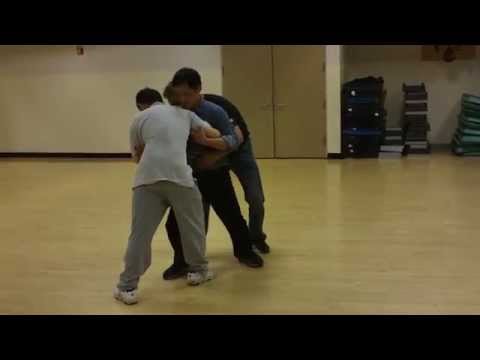
Push Hand Common Mistakes Leg Push & 3-point Lock Up
Key Takeaways
- Using leg push in push hands is a common beginner mistake that creates a rigid, locked-up structure
- The 3-point lock-up occurs when the front foot, rear leg, and upper body form a rigid triangle that is easy to topple
- Pushing from the legs without proper waist and center involvement produces linear force that is easy to deflect
- True push hands power comes from whole-body coordination, not from driving with the legs
- Understanding why leg pushing fails helps practitioners develop more effective alternatives
The Leg Push Problem
One of the most common mistakes in Tai Chi push hands practice is trying to push your partner using leg drive — essentially shoving forward from the rear leg like a football lineman. This approach feels powerful because legs are the strongest muscles in the body, and the initial push can be quite forceful. However, it creates fundamental structural problems that a skilled partner can easily exploit.
The issue is not that the legs should not be involved in pushing — they absolutely should be. The problem is using the legs as the primary power source without coordinating through the waist and center, which produces a rigid, linear force that is both predictable and vulnerable.
What Is 3-Point Lock-Up
When you push primarily from your rear leg, your body naturally forms a rigid structure connecting three points: your front foot (the pivot), your rear leg (the engine), and your contact point with the partner (usually the hands or forearms). These three points create a rigid triangle — and like any rigid structure, it can be toppled by applying force at the right angle.
A skilled push hands partner recognizes the 3-point lock-up instantly. They can feel the rigidity in your structure through the contact point, and they know exactly how to exploit it: a slight redirection to the side causes the entire rigid structure to lose balance because you have committed all your force in one direction and have no flexibility to adjust.
Why It Is So Tempting
Leg pushing is tempting because it produces immediate results against untrained partners. If you are stronger and heavier, pushing from the legs can overwhelm someone who does not know how to redirect. This reinforces the habit — you push from the legs, your partner moves, and you conclude that your technique is working.
The problem reveals itself when you encounter a partner who understands Tai Chi principles. Your powerful leg push meets yielding and redirection, and suddenly your own committed force becomes your undoing. You stumble forward into empty space where your partner used to be, overextended and off-balance.
The Correct Alternative
Effective push hands force originates from the ground (through the legs) but is transmitted through the waist and center before reaching the contact point. The waist acts as a flexible joint that allows you to adjust the direction and timing of your push in real time. This creates an adaptive force that can change direction mid-push rather than committing everything in a single linear trajectory.
Practice Corrections
Focus on turning the waist during every push rather than driving straight from the legs. Practice pushing with just 20-30 percent of your maximum force to maintain the sensitivity needed for adjustment. Let your partner push you and notice when you lock up versus when you can redirect. Work on maintaining a relaxed, flexible connection between your legs and arms through the waist.
For more on correct push hands mechanics, see how to practice push and receive push and the bow and arrow effect.