 Genius Asian
 Push Hands: Center of Mass vs Tai Ji Pivot
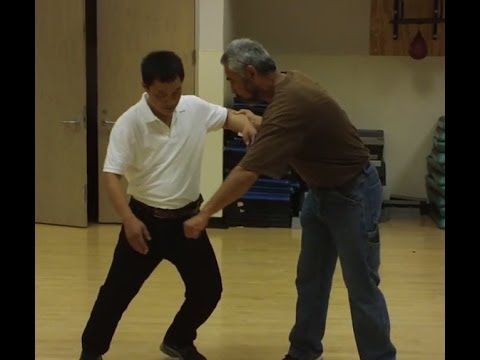
Push Hands: Center of Mass vs Tai Ji Pivot
Key Takeaways
- The center of mass and the pivot point in Tai Chi are related but distinct concepts
- Understanding the difference between them is crucial for effective push hands technique
- The center of mass is a physical property of the body; the pivot is a chosen point around which movement occurs
- Skilled practitioners can separate these two points, creating deceptive and effective movement
- This distinction is one of the more advanced concepts in push hands theory
Center of Mass vs Pivot: Defining the Terms
Center of Mass: The average position of all the mass in your body, weighted by how mass is distributed. For a person standing upright, the center of mass is approximately at the level of the navel, centered between the feet. This is a physical reality that changes based on body position but cannot be moved independently of the body.
Tai Chi Pivot: The point around which your body rotates or moves during push hands. Unlike the center of mass, the pivot can be chosen and changed deliberately. You can pivot around your front foot, your rear foot, your center, your shoulder, or any other point. The choice of pivot determines how your body moves in response to force and how force is transmitted.
Why the Distinction Matters
In push hands, your partner is always trying to find and disrupt your center of mass. If they can apply force through your center, you are uprooted. If they can apply force to one side of your center, you rotate uncontrollably. Your center of mass is your most vulnerable point.
The pivot, however, is your most powerful tool. By choosing where to pivot in real time, you determine how incoming force redirects through your body. A pivot placed at the contact point means force rotates your body away from the push. A pivot placed at your rear foot means your entire body weight stands behind the contact point. A pivot placed between your center of mass and the contact point creates a lever effect.
Advanced Application
Skilled practitioners create a deliberate separation between their center of mass and their pivot point. This separation produces movement that is deceptive and difficult for the partner to predict. The partner pushes expecting the force to act on the center of mass (which it does), but because the pivot is elsewhere, the resulting movement is not what the push intended.
For example, if your partner pushes your chest expecting you to tip backward (rotating around your feet), but you pivot around your hip joint instead, your upper body yields while your lower body advances. The partner’s push succeeded in moving your chest but failed to disrupt your root because the pivot was not where they expected it.
Practical Training
Developing the ability to choose and shift pivot points requires several practice approaches. In solo practice, perform weight shifts and waist turns while consciously choosing different pivot points and noticing how each choice changes the movement quality. In partner practice, experiment with different pivot responses to the same push and observe which responses are most effective at neutralizing force while maintaining position.
The training progression moves from fixed pivot points (always pivoting around the same place) to dynamic pivots (changing the pivot point mid-movement based on the partner’s changing force), which is the hallmark of advanced push hands skill.
Why This Concept Is Difficult to Learn
The separation of center of mass and pivot point is one of the more intellectually demanding concepts in push hands because it requires simultaneous awareness of two different reference points in your body. Most physical activities involve only one center of attention — where the ball is, where your feet land, where the target is. Push hands at the advanced level requires maintaining awareness of your center of mass (where your weight is), your pivot point (where you are rotating around), your partner’s center of mass (where their weight is), and your partner’s force direction. This quadruple awareness develops gradually through years of practice and cannot be forced or rushed. The beginning of understanding comes from simply being aware that center and pivot are different things, even before you can manipulate them independently.
For more on advanced push hands concepts, see merging three gravity centers and alignment and shaking in push hands.