 Genius Asian
 Tai Ji Push Hands Alignment Uncontrollable Shaking
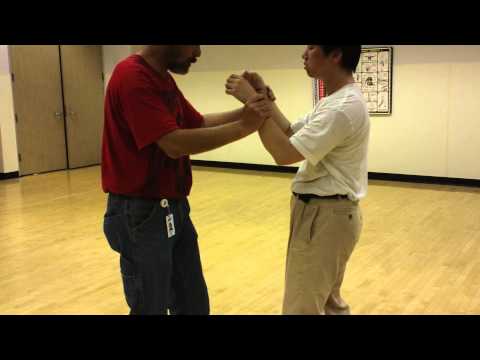
Tai Ji Push Hands Alignment Uncontrollable Shaking
Key Takeaways
- Uncontrollable shaking during push hands practice is a common experience for developing practitioners
- The shaking typically occurs when structural alignment is nearly correct but not yet stable
- It indicates that the body is transitioning from muscular holding to structural support
- Proper alignment eliminates the shaking by allowing the skeleton to bear the load instead of muscles
- This phenomenon is actually a sign of progress, not a problem to be worried about
What Causes the Shaking
During Tai Chi push hands practice, there is a stage of development where practitioners experience involuntary trembling or shaking when receiving force from a partner. This can be alarming — your arms, legs, or entire body vibrate uncontrollably, and no amount of willpower seems to stop it.
Master Byron Zhang explains that this shaking occurs at a specific developmental stage when the practitioner’s alignment is approximately correct but not yet precise. The body is caught between two states: the old pattern of using muscular tension to resist force, and the new pattern of using skeletal alignment to transfer force directly to the ground.
When your alignment is slightly off, the muscles around the misaligned joints must work overtime to compensate, creating fatigue-induced trembling. When alignment is way off, you simply get pushed over and there is no shaking. When alignment is perfect, the force transfers cleanly through your structure and the muscles can relax completely. The shaking zone is the narrow band between poor alignment and good alignment.
The Transition from Muscle to Structure
In the early stages of push hands training, everyone uses muscular force to resist their partner’s push. This works up to a point but is fundamentally limited — your muscles will tire, and a stronger partner will always overpower you.
The goal of Tai Chi training is to develop structural alignment where your skeleton bears the load, transferring your partner’s force through your joints and into the ground. In this state, you can absorb enormous forces with minimal muscular effort because you are not fighting the force — you are conducting it.
The shaking phase represents the transition between these two approaches. Your body is learning to align itself properly, but the alignment is not yet automatic or precise. Small deviations from ideal alignment cause muscles to engage momentarily, then release as the alignment self-corrects, creating the characteristic trembling pattern.
How to Work Through It
The shaking is uncomfortable but it is a sign of progress. Several approaches help you move through this phase:
Accept the shaking: Fighting against the shaking by tensing up makes it worse. Instead, allow it to happen while maintaining your intention to stay aligned and relaxed.
Practice standing meditation: Extended standing in a basic Tai Chi posture (Zhan Zhuang) develops the alignment stability needed to eliminate shaking. The same transition from muscular holding to structural support happens in standing practice, giving you a controlled environment to work through it.
Adjust alignment incrementally: Make small adjustments to your posture when the shaking starts. Often a tiny shift in hip position, knee alignment, or weight distribution will suddenly reduce or eliminate the trembling, revealing the precise alignment your body needs.
Slow down partner practice: Ask your practice partner to push with less force. The reduced load gives your body more time to find the correct alignment path and develop stability.
Beyond the Shaking
Once you pass through the shaking phase and develop stable structural alignment, push hands practice transforms dramatically. Forces that previously required enormous muscular effort to resist now pass through your body effortlessly. Your partner may be pushing hard, but you feel almost nothing because the force is being conducted straight to the ground.
For more on developing structural alignment, see merging three gravity centers and gravity center in form training.