 Genius Asian
 Push Hands: How Much Yang and Yin in Tai Ji?
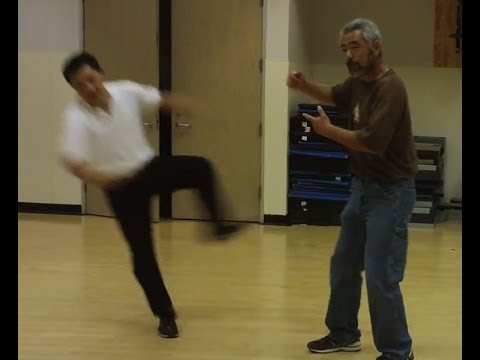
Push Hands: How Much Yang and Yin in Tai Ji?
Key Takeaways
- The balance of Yin and Yang in Tai Chi push hands is not a fixed ratio but a dynamic, constantly shifting equilibrium
- Understanding when to express Yang (issuing force) and when to express Yin (yielding) is a core push hands skill
- Beginners tend to be either too Yang (rigid and forceful) or too Yin (passive and collapsing)
- Advanced practitioners maintain a continuous blend of both qualities, adjusting in real time
- The concept applies to all aspects of Tai Chi practice, not just push hands
The Yin-Yang Framework in Push Hands
Yin and Yang are not abstract philosophical concepts in Tai Chi — they are practical descriptions of the two fundamental qualities of movement and force. Yang represents the active, expanding, issuing quality. Yin represents the receptive, contracting, absorbing quality. In push hands practice, Yang is expressed when you push, press, or issue force against your partner. Yin is expressed when you yield, redirect, or absorb your partner’s force.
The question “how much Yang and how much Yin?” is one of the most fundamental questions in Tai Chi practice, and the answer is deceptively simple: it depends on the moment.
The Common Mistakes
Too Much Yang: The beginner who is too Yang pushes constantly, meets force with force, and relies on muscular strength. Against a less-skilled partner, this may produce results. Against a skilled Tai Chi practitioner, the excess Yang creates rigidity that is easy to exploit — your partner simply yields and redirects your committed force, leaving you overextended and off-balance.
Too Much Yin: The opposite extreme is equally problematic. A practitioner who is too Yin yields to everything, never issues force, and becomes passive and formless. While this avoids the vulnerability of excess Yang, it also forfeits the ability to control the exchange. Pure Yin in push hands is essentially retreating without engaging.
The Dynamic Balance
Advanced push hands practitioners maintain a continuous blend of Yin and Yang that shifts moment by moment based on what the situation demands. When the partner pushes, the response is primarily Yin (yielding and redirecting) with a seed of Yang (maintaining structure and preparing to counter). When the opportunity to push arises, the action is primarily Yang (issuing force) with a seed of Yin (remaining sensitive to the partner’s response and ready to adjust).
This concept is captured in the Tai Chi principle that within Yang there is always Yin, and within Yin there is always Yang. There is never pure Yang (which would be rigid and breakable) or pure Yin (which would be formless and powerless).
Practical Application
In practice, developing the correct Yin-Yang balance requires sensitivity training through slow, attentive push hands practice. Start with a cooperative partner at low speed and intensity. Focus on feeling the transitions between Yin and Yang states rather than trying to “win” the exchange. Gradually increase speed and intensity as your sensitivity develops.
A useful self-check: if you find yourself using muscular effort, you are too Yang. If you find yourself being pushed around without any response, you are too Yin. The goal is a state where your body responds appropriately and automatically to the changing conditions of the exchange.
Beyond Push Hands
The Yin-Yang balance applies to all Tai Chi practice. In form work, each posture contains both Yin and Yang elements. The forward-moving arm expresses Yang while the withdrawing arm expresses Yin. The leading leg is Yang while the trailing leg is Yin. Understanding this duality deepens your form practice and prepares you for partner work.
For more on push hands dynamics, see circular energy in push hands and the bow and arrow effect.