 Genius Asian
 Sample How To Practice Taiji Yin Yang Balance
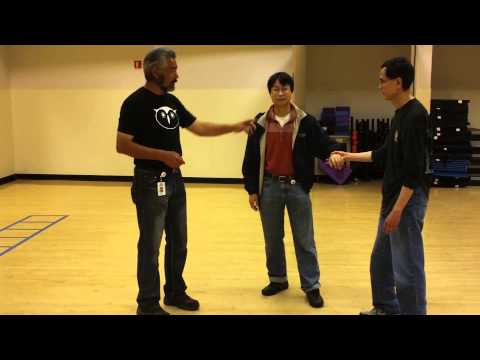
How to Practice Taiji Yin Yang Balance: A Sample Demonstration
Key Takeaways
- Yin-yang balance is the fundamental principle underlying all Tai Chi movement
- Balance means the continuous interplay of opposing qualities, not a static 50/50 split
- Every moment in Tai Chi practice should contain both yin and yang elements simultaneously
- This video demonstrates what balanced practice looks and feels like
- Understanding yin-yang balance transforms practice from exercise into internal cultivation
What This Video Shows
Yin and yang are not abstract philosophical concepts in Tai Chi — they are tangible qualities that you can feel in every movement. This video provides a sample demonstration of how yin-yang balance manifests in actual Taiji practice.
The demonstration shows how opposing qualities coexist in each moment: when one hand advances (yang), the other withdraws (yin). When weight fills the front leg (yang), the rear leg empties (yin). This constant interplay creates the flowing, dynamic quality that distinguishes Tai Chi from static exercise.
Understanding Yin and Yang in Movement
In Tai Chi practice, yin and yang manifest as complementary pairs:
- Full and empty: One leg carries weight (full) while the other is light (empty)
- Advance and retreat: Forward movement contains the seed of backward movement
- Open and close: The body expands and contracts in continuous alternation
- Soft and firm: Relaxed structure maintains both flexibility and stability
The key insight is that these are not alternating states but simultaneous ones. Even in the most yang moment (maximum forward extension), yin is present (ready to withdraw). This is what makes Tai Chi movement appear smooth and continuous rather than start-and-stop.
Practicing Balance
To develop yin-yang awareness in your own practice:
- During form practice, constantly check: where is the yin? Where is the yang?
- Feel the weight distribution in your legs — can you clearly distinguish full from empty?
- Notice the direction of each hand — are they complementary or redundant?
- Pay attention to your breath — does it flow naturally with the yin-yang rhythm of the movement?
How to Get the Most From Watching
Watching demonstration and training videos is most productive when you approach them actively rather than passively. Here are strategies for extracting maximum value:
First Watch: Watch the entire video without trying to analyze anything. Let the overall impression settle in. Notice what catches your attention naturally.
Second Watch: Focus on specific elements. Watch only the feet. Watch only the hands. Watch the relationship between the two practitioners. Each focused viewing reveals details you missed before.
Physical Practice: After watching, stand up and try the movements or concepts you observed. Even imperfect imitation builds neuromuscular connections that purely visual learning cannot create.
Reflection: After practicing, watch the video again. You will notice things that only become visible after you have attempted the movements yourself. This watch-practice-watch cycle is one of the most effective self-learning methods available.
Note-Taking: Keep a practice journal where you record observations, questions, and insights from your viewing. Over time, this journal becomes a personalized training guide that tracks your development.
For deeper exploration of these principles, see the Song Kong Yuan Man lesson or the Tai Chi 108 Steps Form.