 Genius Asian
 Sample Push Hand Basic Foundation Training Fundamental
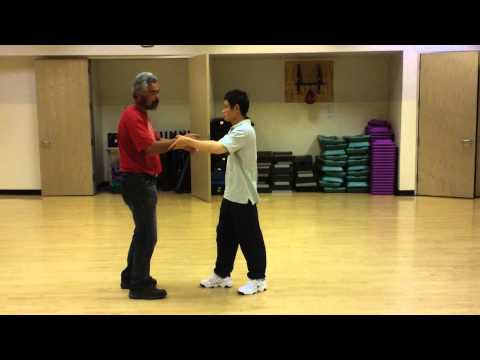
Push Hands Foundation Training: Basic Fundamentals Sample
Key Takeaways
- This video samples the foundational training exercises that underpin all push hands practice
- The fundamentals are simple but must be practiced extensively before they become effective
- Foundation training develops root, sensitivity, and structural alignment
- These basic exercises remain relevant at every level of push hands development
- Returning to fundamentals periodically keeps advanced practice grounded and honest
What This Video Shows
This is a demonstration of the basic foundation training exercises that form the bedrock of push hands practice. These exercises are deliberately simple — not because they are easy to master, but because simplicity allows for deep focus on the essential qualities.
The fundamentals shown here include stance work, basic contact patterns, and the weight-shifting mechanics that power all push hands technique.
Why Fundamentals Matter
There is a common pattern in martial arts training: beginners are eager to move past the basics and learn exciting techniques. But the most skilled practitioners invariably have the strongest fundamentals. The basics are not just a starting point — they are the foundation that supports everything else.
In push hands, the fundamentals include:
- Stance and root — the ability to stand stably and transmit force to the ground
- Contact sensitivity — the ability to feel the partner’s intention through touch
- Weight shifting — the ability to move your center of gravity smoothly and precisely
- Structural alignment — the ability to maintain connected structure under pressure
These four skills determine your effectiveness in push hands more than any specific technique.
Returning to Basics
Even advanced practitioners benefit from returning to basic foundation exercises regularly. Over time, subtle bad habits accumulate. Techniques that felt crisp develop small inefficiencies. Foundation work resets these drifts and restores the clean mechanics that advanced practice depends on.
How to Get the Most From Watching
Watching demonstration and training videos is most productive when you approach them actively rather than passively. Here are strategies for extracting maximum value:
First Watch: Watch the entire video without trying to analyze anything. Let the overall impression settle in. Notice what catches your attention naturally.
Second Watch: Focus on specific elements. Watch only the feet. Watch only the hands. Watch the relationship between the two practitioners. Each focused viewing reveals details you missed before.
Physical Practice: After watching, stand up and try the movements or concepts you observed. Even imperfect imitation builds neuromuscular connections that purely visual learning cannot create.
Reflection: After practicing, watch the video again. You will notice things that only become visible after you have attempted the movements yourself. This watch-practice-watch cycle is one of the most effective self-learning methods available.
Note-Taking: Keep a practice journal where you record observations, questions, and insights from your viewing. Over time, this journal becomes a personalized training guide that tracks your development.
The Foundation Never Becomes Obsolete
Unlike specific techniques that may become less relevant as you advance, foundational skills remain critical at every level. The root, sensitivity, alignment, and weight-shifting ability you develop through basic foundation training are the same qualities that distinguish a master from an intermediate practitioner. The difference is not what they practice but the depth and precision with which they practice it. Return to these basics regularly and you will find new layers of understanding each time. For the structured training that builds on these fundamentals, see the push hands basic training series or the double hands training series.