 Genius Asian
 Tai Chi Push Hands Basic Training, Part 6
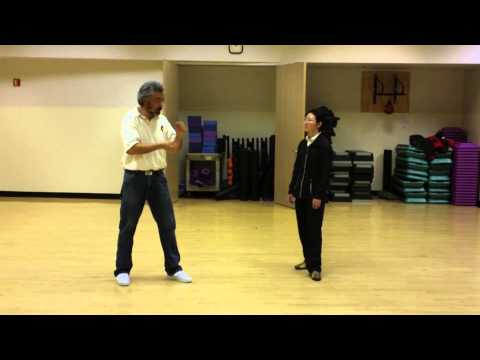
Tai Chi Push Hands Basic Training Part 6: Are You Doing It Correctly?
Key Takeaways
- This is part six of the Taiji push hands basic training series, covering Peng Lu Ji An (the four primary energies)
- The fundamental question for every practitioner: are you doing the movements correctly?
- Like learning to swim or ride a bike, push hands requires many repetitions before the movements become natural
- There are no rigid forms to follow — the principle is to follow the water taiji approach rather than moving arms from point A to point B
- At higher skill levels, strict correctness becomes less important as the practitioner develops internal sensitivity
The Importance of Repetition
Master Byron Zhang’s teaching approach emphasizes practice through repetition rather than intellectual understanding alone. Push hands — the two-person practice in Tai Chi where partners exchange energy through their arms and bodies — is a physical skill that cannot be learned by watching alone.
As the Master explains, this is just like learning to swim or ride a bicycle. You have to repeat the movements many times. You can watch videos, read books, and understand the theory perfectly, but until your body has repeated the patterns enough times to internalize them, you will not be able to execute them under pressure.
This is why the basic training series exists. Each part isolates a specific aspect of push hands practice so that students can drill it repeatedly until it becomes second nature.
Following Principles, Not Forms
One of the most important points Master Byron makes in this lesson is about the nature of correct practice. He states that in push hands, you should follow your feet — there are no fixed forms in the way many people think of them. You are not simply moving your arms from position A to position B.
Instead, the movements should emerge from your internal mechanics:
- Your weight shifting generates the movement
- Your hands and arms follow the body’s core rotation
- The energy originates from the ground, travels through the legs, and expresses through the hands
- If you are only moving your arms, you are doing it wrong regardless of what the external shape looks like
This is a fundamental distinction in Water Taiji training. The external appearance matters less than the internal process. Two practitioners might look different on the outside but both be correct if their internal mechanics are sound.
The Four Primary Energies: Peng Lu Ji An
The push hands drill practiced in this series works with the four foundational energies of Tai Chi:
- Peng (Ward Off): An expanding, upward energy that creates space and protects your center
- Lu (Roll Back): A yielding, redirecting energy that neutralizes incoming force
- Ji (Press): A forward pressing energy that disrupts the partner’s balance
- An (Push): A downward-and-forward energy that uproots the partner
These four energies cycle continuously during push hands practice. Partners take turns applying and yielding to each energy in a flowing, circular pattern. At the basic level, the pattern is choreographed. At advanced levels, it becomes spontaneous and responsive.
Learning From Students’ Mistakes
Part of the value of this video is watching other students practice and seeing their mistakes. Master Byron corrects students in real time, and these corrections are often more instructive than watching perfect execution.
Common mistakes you will see include:
- Using arm strength instead of body weight to push
- Resisting incoming force instead of yielding and redirecting
- Losing root by rising up on the toes or leaning forward
- Disconnecting the arms from the body’s core movement
- Rushing through the pattern instead of feeling each exchange
By watching these mistakes and the corrections applied, you can check your own practice for the same issues.
Does Correctness Matter?
Interestingly, Master Byron suggests that for some levels of practice, strict correctness does matter, but for higher levels it may not. This is not a contradiction. At the beginning, you need structure and correct mechanics to build a proper foundation. If you learn bad habits early, they become very difficult to correct later.
But at advanced levels, the practitioner has internalized the principles so deeply that the movements adapt naturally to the situation. The form dissolves and what remains is the underlying principle — like water finding its own path.
How to Practice
If you want to follow along with this training series:
- Watch the entire video at least once without trying to imitate
- Find a practice partner and work through the basic Peng Lu Ji An pattern slowly
- Focus on weight shifting and body mechanics rather than arm movements
- Record your practice and compare it to the video demonstrations
- Repeat regularly — short daily practice sessions are better than long occasional ones
For foundational material, start with our Tai Chi 108 Steps Form or explore the 8 Section Brocade Qigong for a complementary standing practice. For the continuation of push hands training, see our guide on delivering power by shifting weight.