 Genius Asian
 Tai Chi Push Hands Basic Training, Part 2
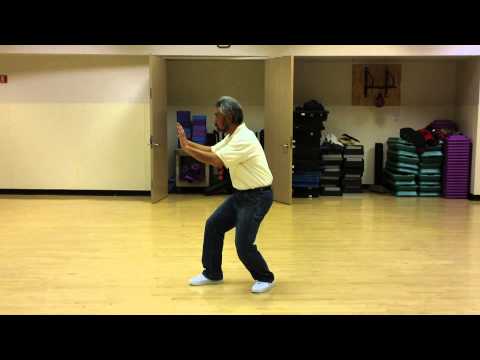
Tai Chi Push Hands Basic Training Part 2: Solo Practice with Master Byron Zhang
Key Takeaways
- Part 2 focuses on solo practice methods for the Peng Lu Ji An pattern
- Solo practice is essential because you will not always have a partner available
- Master Byron Zhang demonstrates how to drill the four fundamental energies by yourself
- Daily repetition is the key to internalizing the movement patterns
- Each movement can be practiced independently without needing to master other parts of the form
What This Video Shows
After the introduction in Part 1, Master Byron Zhang now addresses one of the biggest practical challenges in learning push hands: how do you practice when you do not have a partner? The answer is structured solo drills.
Push hands is fundamentally a two-person practice, but the skills that make push hands effective — weight shifting, body mechanics, relaxation under pressure — can all be developed on your own. In fact, solo practice is where most of the real skill-building happens. The partner practice is where you test what you have built.
The Solo Practice Method
Master Byron demonstrates a specific solo drill for Peng Lu Ji An. The beauty of this drill is its simplicity. You do not need any equipment, any special space, or any partner. You can practice this in your living room, in a park, or anywhere you have enough room to stand and move your arms.
The drill follows the same four-energy cycle from Part 1, but adapted for solo practice:
- Peng (Ward Off): Extend your forearm forward and upward, feeling the expansion from your center
- Lu (Roll Back): Turn the waist and draw the energy back, as if redirecting an incoming push
- Ji (Press): Shift forward and press with both hands, imagining contact with a partner
- An (Push): Settle the weight and push downward-forward, completing the cycle
The critical instruction from Master Byron is to repeat this pattern many times every day. Not once or twice — many times. The goal is not to understand the movement intellectually. The goal is to make it so automatic that your body does it without conscious thought.
Why Repetition Matters
There is a well-known principle in martial arts training: you do not rise to the level of your understanding; you fall to the level of your training. In a real push hands exchange, things happen too fast for conscious decision-making. Your body needs to have the patterns pre-loaded.
This is where solo practice becomes invaluable. By repeating the Peng Lu Ji An cycle hundreds and eventually thousands of times, you create what neuroscientists call motor memory. The movement shifts from conscious effort to automatic response.
Daily practice guidelines for beginners:
- Start with 5-10 minutes of slow, focused repetition
- Concentrate on one energy at a time if the full cycle feels overwhelming
- Gradually increase speed only after the slow movement feels natural
- Practice at the same time each day to build a consistent habit
For the next step in this series, see Part 3 where Master Byron introduces partner practice. Or revisit Part 1 if you need a refresher on the Water Tai Chi approach to these four fundamental energies.