 Genius Asian
 Tai Chi Push Hands Basic Training, Part 3
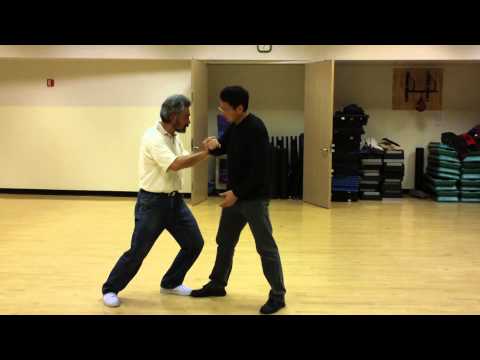
Tai Chi Push Hands Basic Training Part 3: Partner Practice and Common Mistakes
Key Takeaways
- Part 3 transitions from solo practice to working with a partner
- Master Byron Zhang corrects students in real time, revealing the most common mistakes beginners make
- Watching other students’ errors is one of the most efficient ways to improve your own practice
- Partner practice introduces variables that solo work cannot simulate — resistance, timing, and adaptation
- Each movement in the series remains independent, so you can start here even without mastering previous parts
What This Video Shows
With Parts 1 and 2 covering the foundational Peng Lu Ji An pattern and solo drills, Master Byron Zhang now introduces the element that makes push hands truly come alive: another person. In this video, students pair up and practice the four-energy cycle together while Master Byron observes and corrects.
This is where theory meets reality. Solo practice builds the mechanics, but partner practice reveals the gaps. When another person applies pressure, shifts unexpectedly, or resists your movement, all the habits you thought you had corrected tend to resurface.
Common Mistakes Master Byron Corrects
The most educational part of this video is watching Master Byron correct students in real time. The mistakes he addresses are nearly universal among beginners:
- Using muscle instead of structure — pushing with arm and shoulder strength rather than body weight
- Holding the breath — tension causes practitioners to forget to breathe naturally
- Losing center — leaning forward or backward instead of maintaining an upright, rooted posture
- Breaking contact — pulling away from the partner instead of maintaining a continuous connection
- Competing — treating the drill as a contest rather than a cooperative learning exercise
Each correction applies not just to this specific drill but to push hands practice at every level.
The Value of Partner Feedback
One thing solo practice cannot give you is real-time tactile feedback. When you practice alone, there is no way to know if your Peng energy would actually redirect incoming force or if your Lu would successfully neutralize a push. You are guessing.
With a partner, the feedback is immediate and honest. If your structure collapses, you feel it. If your weight transfer is effective, your partner feels it. This instant feedback loop accelerates learning in ways that solo practice alone cannot match.
Practice Tips for Partner Work
When working with a partner for the first time:
- Start at about 20 percent speed and 20 percent power
- Agree on the pattern before you begin — both partners should know the sequence
- Take turns being the initiator and the responder
- Communicate openly about what you feel
- Do not try to win — the goal is mutual learning
Building a Sustainable Practice
The journey of Tai Chi development is measured in months and years, not days and weeks. Here are principles that will serve you well regardless of where you are in your practice:
Consistency Over Intensity: Ten minutes of daily practice produces better results than a three-hour session once a week. Your nervous system needs regular input to build the pathways that make push hands and form work effective. Treat your practice like brushing your teeth — something you simply do every day, not something you negotiate with yourself about.
Quality Over Quantity: Slow, mindful repetitions with full attention are worth more than hundreds of distracted repetitions. When you practice, be present. Feel each weight shift, notice each point of tension, and consciously release what does not serve the movement.
Patience With Plateaus: Everyone hits periods where improvement seems to stall. These plateaus are not signs of failure — they are periods of integration where your nervous system is consolidating what it has learned. Continue practicing through plateaus and breakthroughs will come.
Community and Sharing: Tai Chi was traditionally learned in community, and that model remains the most effective. Practice with different partners, discuss your experiences, and share what you discover. The more perspectives you encounter, the richer your understanding becomes.
For the continuation of this series, see Part 4 where Master Byron continues partner corrections. To revisit the solo preparation, go back to Part 2.