 Genius Asian
 Tai Chi Push Hands Basic Training, Part 5
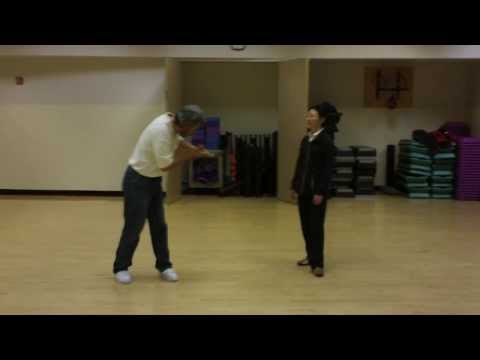
Tai Chi Push Hands Basic Training Part 5: Refining Partner Practice
Key Takeaways
- Part 5 continues refining partner practice with increasingly nuanced corrections from Master Byron Zhang
- At this stage, the gross mechanical errors have been addressed and the focus shifts to sensitivity and timing
- Students begin to develop the ability to feel rather than see what is happening in the exchange
- The transition from thinking about movements to feeling them is one of the most important thresholds in push hands development
- Consistent practice across all five parts builds a solid foundation for advanced techniques
What This Video Shows
By Part 5 of the basic training series, the students have been through several rounds of practice and correction. The big, obvious mistakes from the earlier sessions have largely been addressed. Now Master Byron Zhang starts working on the subtler aspects of push hands that separate mechanical execution from genuine skill.
This is the stage where push hands starts to become interesting. The pattern is familiar enough that students can stop thinking about what comes next and start paying attention to what they are feeling through the point of contact with their partner.
From Mechanics to Sensitivity
The first four parts of this series built the mechanical foundation: the correct positions, the weight shifts, the four-energy cycle. Part 5 marks a shift toward developing sensitivity — the ability to feel your partner’s intention through physical contact.
Sensitivity in push hands means:
- Detecting weight shifts before they become visible movements
- Feeling tension in your partner’s body that telegraphs their next action
- Sensing the direction of incoming force so you can redirect it precisely
- Reading the quality of your partner’s root — whether they are stable or unstable
This tactile awareness is what makes Tai Chi push hands fundamentally different from other martial practices that rely primarily on visual information.
Master Byron’s Refinements
The corrections in this video are more subtle than in earlier parts. Instead of repositioning arms or adjusting stances, Master Byron focuses on:
- The quality of contact — not too heavy, not too light
- The continuity of energy flow through the entire Peng Lu Ji An cycle
- The moment-to-moment awareness of where both your weight and your partner’s weight are distributed
- The ability to maintain relaxation even when feeling pressure
These refinements cannot be learned from watching alone. They must be practiced with a partner and felt through direct experience.
Completing the Foundation
With Part 5, you are nearly through the complete basic training cycle. The progression from demonstration to solo practice to partner work has given you a comprehensive introduction to push hands fundamentals.
Building a Sustainable Practice
The journey of Tai Chi development is measured in months and years, not days and weeks. Here are principles that will serve you well regardless of where you are in your practice:
Consistency Over Intensity: Ten minutes of daily practice produces better results than a three-hour session once a week. Your nervous system needs regular input to build the pathways that make push hands and form work effective. Treat your practice like brushing your teeth — something you simply do every day, not something you negotiate with yourself about.
Quality Over Quantity: Slow, mindful repetitions with full attention are worth more than hundreds of distracted repetitions. When you practice, be present. Feel each weight shift, notice each point of tension, and consciously release what does not serve the movement.
Patience With Plateaus: Everyone hits periods where improvement seems to stall. These plateaus are not signs of failure — they are periods of integration where your nervous system is consolidating what it has learned. Continue practicing through plateaus and breakthroughs will come.
Community and Sharing: Tai Chi was traditionally learned in community, and that model remains the most effective. Practice with different partners, discuss your experiences, and share what you discover. The more perspectives you encounter, the richer your understanding becomes.
For the concluding installment, continue to Part 6 where Master Byron addresses whether you are doing it correctly. For related training on power delivery, see the series on delivering power by shifting weight.