 Genius Asian
 Tai Chi Push Hands For Beginners, A Student's Tip
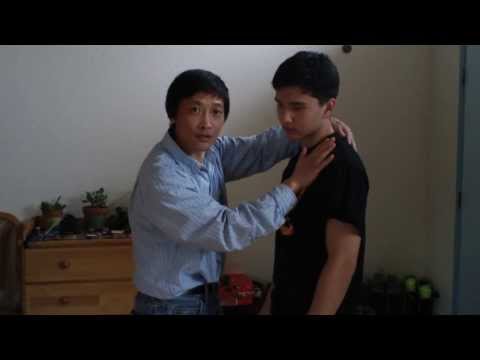
Tai Chi Push Hands for Beginners: A Student’s Perspective and Tips
Key Takeaways
- This video offers a lighthearted, beginner-level perspective on learning Tai Chi push hands
- The biggest challenge for beginners is unlearning basic instincts — your body wants to resist force, but push hands requires yielding
- Master Byron Zhang clarifies that the learning process is not about forgetting what you know (N-1) but starting fresh at a new starting point
- At each new level of push hands, you may need to unlearn what worked at the previous level
- Motivation and setting small achievable goals are key factors in sustaining long-term Tai Chi practice
What This Video Shows
This is not a polished master demonstration — it is something arguably more useful. A student shares their honest, sometimes humorous perspective on what it is actually like to begin learning Tai Chi push hands. If you have ever felt clumsy, confused, or frustrated while trying to learn push hands, this video will feel familiar.
The video captures the real experience of being a beginner: the awkwardness, the instincts that get in the way, and the gradual realization that learning Tai Chi means rewiring how your body responds to physical contact.
The Challenge of Unlearning
The core insight from this video is that push hands requires you to fight against your own instincts. When someone pushes you, every fiber of your body wants to push back. When someone grabs your arm, you instinctively tense up and try to pull away. These are survival responses hardwired into your nervous system.
In Tai Chi push hands, these instincts are exactly wrong. Instead of pushing back, you yield and redirect. Instead of tensing up, you relax and flow. The student in this video describes the strange process of trying to override these deep-seated responses.
Master Byron Zhang offers an important correction in the video. The student initially frames this as “forgetting” what you know. But Byron clarifies that it is not about subtraction — going from N to N-1. Instead, you start completely fresh at a new starting point. This is a meaningful distinction. You are not erasing old skills; you are building an entirely new set of responses alongside them.
Why Starting Late Is Actually Fine
One of the most encouraging messages in this video is the acknowledgment that most adults start Tai Chi late in life, after decades of building physical habits. The student openly admits to starting “in the worst state” — with all the tension, resistance, and bad habits that adult life creates.
But here is the upside: when you start at the worst state, anything you try will be an improvement. This removes the pressure of finding the one perfect training method. Try ten different approaches. Some will click and others will not. The important thing is to stay motivated and keep practicing.
Small Goals and Motivation
The student shares a personal philosophy about learning that applies far beyond Tai Chi: set small goals and stay in what they call “the linear region” of improvement. In other words, aim for steady incremental progress rather than dramatic leaps.
This approach works because:
- Small goals are achievable, which builds confidence
- Consistent small improvements compound over time
- You are less likely to burn out or quit from frustration
- Each success motivates the next practice session
For a deeper exploration of this learning philosophy, see our video on the smartest and most efficient learning approach. And for the next installment in this beginner’s journey, continue with Push Hands for Beginners Part 2.