 Genius Asian
 Tai Chi Push Hands For Beginners, Part 2
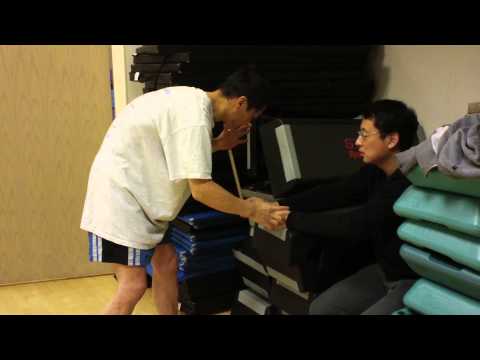
Tai Chi Push Hands for Beginners Part 2: Simple Training Examples from Master Yuan
Key Takeaways
- Master Yuan provides simple, effective training examples designed specifically for beginners
- Practicing with as many different partners as possible accelerates learning
- Learning from multiple masters gives you a broader understanding of push hands
- Taiji is ultimately personal — you must develop your own expression of the art
- Fun and entertainment value in practice sessions keeps motivation high
What This Video Shows
Part 2 of the beginners’ series introduces a new instructor, Master Yuan, who brings a different teaching approach. His training examples are deliberately simple and easy to follow, making them ideal for true beginners who might feel overwhelmed by more complex drills.
The video blends Master Yuan’s instruction with the student’s own practice experiences, maintaining the approachable, sometimes humorous tone that makes this series feel like learning alongside a friend rather than watching a formal lesson.
Master Yuan’s Approach
Master Yuan’s training examples stand out for their simplicity. Rather than presenting elaborate drills that require memorization, he focuses on basic movements that can be practiced immediately. This approach removes the barrier that often stops beginners from practicing — the feeling that they do not remember the sequence well enough to drill on their own.
The exercises target fundamental skills:
- Basic weight shifting while maintaining root
- Simple hand contact patterns with a partner
- Relaxation drills that teach the body to yield rather than resist
- Awareness exercises that develop sensitivity to a partner’s movements
Practice With Many Partners
One of the strongest pieces of advice in this video is to practice with as many partners as you can find. Each partner presents a different challenge — different body weight, different habits, different energy. A technique that works perfectly against one partner may fail completely against another.
This variety forces you to develop genuine skill rather than just learning to handle one specific person. It also exposes you to different interpretations and approaches, broadening your understanding of push hands.
Developing Your Own Taiji
The video includes a profound insight from Master Wang Zhuanghong: once you have crossed the river, you no longer need the boat. This metaphor captures the evolutionary nature of Tai Chi learning. The techniques and drills that serve you at one level become constraints at the next.
Your ultimate goal is not to perfectly reproduce any teacher’s movements. Your goal is to internalize the principles and express them through your own body, in your own way. This is why learning from multiple teachers is valuable — not to copy any single one, but to synthesize diverse influences into something uniquely yours.
Building a Sustainable Practice
The journey of Tai Chi development is measured in months and years, not days and weeks. Here are principles that will serve you well regardless of where you are in your practice:
Consistency Over Intensity: Ten minutes of daily practice produces better results than a three-hour session once a week. Your nervous system needs regular input to build the pathways that make push hands and form work effective. Treat your practice like brushing your teeth — something you simply do every day, not something you negotiate with yourself about.
Quality Over Quantity: Slow, mindful repetitions with full attention are worth more than hundreds of distracted repetitions. When you practice, be present. Feel each weight shift, notice each point of tension, and consciously release what does not serve the movement.
Patience With Plateaus: Everyone hits periods where improvement seems to stall. These plateaus are not signs of failure — they are periods of integration where your nervous system is consolidating what it has learned. Continue practicing through plateaus and breakthroughs will come.
Community and Sharing: Tai Chi was traditionally learned in community, and that model remains the most effective. Practice with different partners, discuss your experiences, and share what you discover. The more perspectives you encounter, the richer your understanding becomes.
For the next installment, continue with Part 3 which introduces force measurement exercises. For the student perspective that started this series, revisit A Student’s Tip.