 Genius Asian
 Use Treadmill As Partner For Tai Chi Push Hands
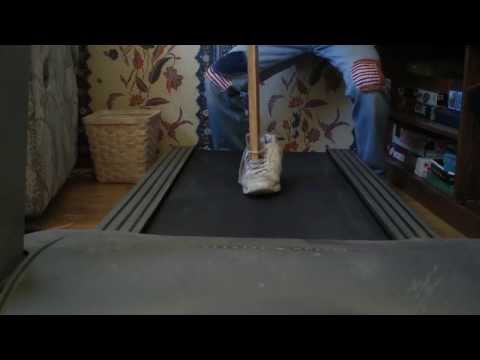
Use a Treadmill as a Push Hands Partner: A Creative Training Solution
Key Takeaways
- A treadmill can serve as a consistent, always-available push hands training partner
- This solves the common problem of not having a partner available for regular practice
- The treadmill provides continuous, adjustable resistance that simulates a partner’s push
- Unlike a human partner, the treadmill never cancels, never improves at a different rate, and is always ready
- This is a creative innovation in traditional martial arts training methodology
What This Video Shows
Here is a problem every push hands practitioner faces: you need a partner to practice, but partners are not always available. They have their own schedules, their own commitments, and sometimes their skill level changes at a different rate than yours. Eventually, the partnership that was mutually beneficial may become unbalanced.
This video presents an unconventional but clever solution: use a treadmill as your push hands training partner. The moving belt provides continuous resistance that you can adjust, and the treadmill is always available, always consistent, and never takes a day off.
How It Works
The treadmill’s moving belt creates a continuous force that you must resist and redirect. By standing alongside the treadmill and placing your hands on the belt or the treadmill’s frame, you can practice the fundamental push hands skills:
- Rooting — maintaining your stance against continuous pressure
- Yielding — learning to absorb and redirect mechanical force
- Weight shifting — practicing the transfer of body weight in response to pressure
- Sensitivity — feeling changes in the machine’s force and adjusting accordingly
The speed control on the treadmill lets you adjust the difficulty. Start slow and gradually increase as your skill develops.
Advantages Over Traditional Solo Practice
Solo practice with visualization is valuable, but it lacks the physical feedback of actual resistance. The treadmill fills this gap by providing real mechanical force that your body must respond to. This is closer to the experience of working with a human partner than any visualization exercise can be.
Additional benefits:
- Consistency — the force is identical every session, allowing precise measurement of improvement
- Availability — practice any time without coordinating schedules
- Adjustability — dial in exactly the level of challenge you need
- Safety — a treadmill does not push too hard, lose balance, or apply unexpected techniques
A Spirit of Innovation
This video embodies the channel’s philosophy of finding creative, accessible solutions to common problems. Traditional martial arts training methods evolved in specific contexts, but the principles behind them are universal. Adapting those principles to modern equipment is not disrespectful to tradition — it is a way of keeping tradition alive by making it practical.
Building a Sustainable Practice
The journey of Tai Chi development is measured in months and years, not days and weeks. Here are principles that will serve you well regardless of where you are in your practice:
Consistency Over Intensity: Ten minutes of daily practice produces better results than a three-hour session once a week. Your nervous system needs regular input to build the pathways that make push hands and form work effective. Treat your practice like brushing your teeth — something you simply do every day, not something you negotiate with yourself about.
Quality Over Quantity: Slow, mindful repetitions with full attention are worth more than hundreds of distracted repetitions. When you practice, be present. Feel each weight shift, notice each point of tension, and consciously release what does not serve the movement.
Patience With Plateaus: Everyone hits periods where improvement seems to stall. These plateaus are not signs of failure — they are periods of integration where your nervous system is consolidating what it has learned. Continue practicing through plateaus and breakthroughs will come.
Community and Sharing: Tai Chi was traditionally learned in community, and that model remains the most effective. Practice with different partners, discuss your experiences, and share what you discover. The more perspectives you encounter, the richer your understanding becomes.
For more traditional push hands training methods, see the basic training series or the beginner’s daily routine. For the philosophical foundation, explore the Water Tai Chi Dialogue series.